
Updated on 29-Sep-2026
Kitchen mold is often caused by leaks, condensation, and poor ventilation in Toronto homes. Common spots include under sinks, behind fridges, and inside cabinets. Signs range from musty smells to visible black patches. Professional remediation ensures safe removal, while prevention focuses on fixing leaks, improving airflow, and regular inspections.
Kitchen mold is usually a sign of an underlying moisture problem. Leaking plumbing, condensation, cooking steam, damaged caulking, and poorly ventilated cabinets can all create conditions where mold grows on drywall, wood, grout, flooring, and other kitchen materials.
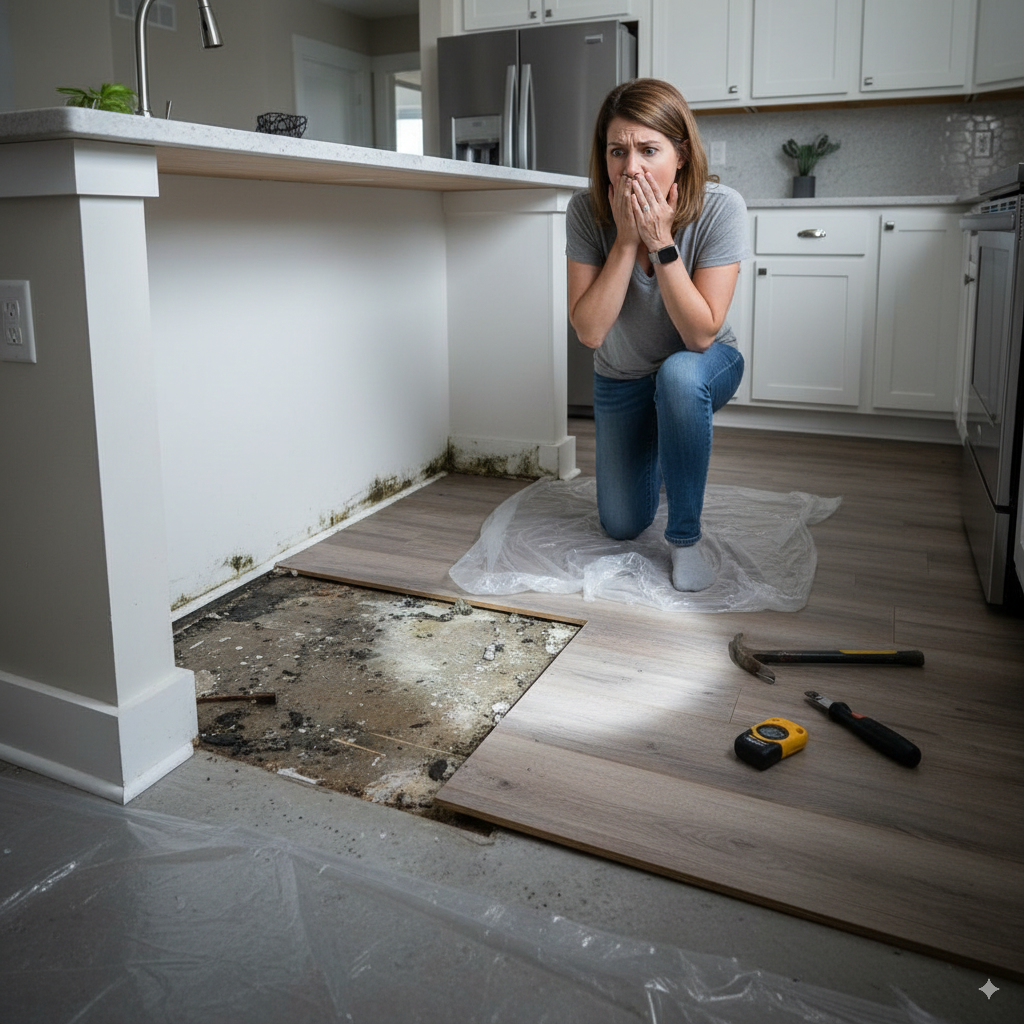
Common problem areas include under kitchen sinks, behind refrigerators and dishwashers, inside cabinets, around windows, beneath flooring, and behind backsplashes. Sometimes mold is obvious. In other cases, a persistent musty odour or water-damaged cabinet is the first warning sign.
Various fungi may occur in indoor kitchens, including species belonging to Aspergillus, Penicillium and Cladosporium. However, you generally cannot determine a mold species—or its potential health significance—based on colour alone.
The most important step is finding why the area is damp. Cleaning visible mold without correcting the leak, condensation, or humidity problem often results in regrowth.
Table of Contents
Common Causes of Kitchen Mold
| Cause | How It Can Lead to Mold | Where to Check |
|---|---|---|
| Plumbing leaks | Slow drips keep cabinets and building materials continuously damp | Under sinks, supply lines, drain traps |
| Appliance leaks | Dishwashers and refrigerators can leak behind or underneath units | Appliance connections and flooring |
| Poor ventilation | Cooking steam raises indoor moisture and increases condensation | Walls, ceilings, windows and cabinets |
| Failed caulking | Damaged seals allow water behind countertops and backsplashes | Sink edges, countertops and backsplash joints |
| Pipe condensation | Cold plumbing surfaces can collect moisture in enclosed cabinets | Under-sink supply pipes |
| Roof or exterior leaks | Water intrusion may appear on kitchen ceilings or exterior walls | Ceiling stains and window areas |
| Past water damage | Materials that were never completely dried can support hidden growth | Drywall cavities, subfloor and cabinetry |
Is Kitchen Mold Dangerous?
Yes. Mold in the kitchen is dangerous because it affects both health and property safety. Since kitchens are high-use spaces where food is stored and prepared, mold growth raises particular concerns.
Health Risks of Kitchen Mold
- Allergies & asthma – Spores aggravate breathing issues, especially in children and seniors.
- Respiratory problems – Prolonged exposure may cause coughing, sinus irritation, and wheezing.
- Food contamination – Mold near pantries, cabinets, or appliances increases risk of cross-contamination.
- Toxic molds (like black mold) – Can release mycotoxins that cause more severe symptoms if exposure is long-term.
Structural & Property Risks
- Wood rot in cabinets, shelving, and subflooring.
- Drywall damage around sinks and backsplashes.
- Hidden mold spread behind walls or under flooring if leaks aren’t fixed.
➡️ Takeaway: Mold in the kitchen isn’t just unsightly—it can compromise indoor air quality, contaminate food areas, and weaken structural materials if ignored.
What About “Toxic Black Mold”?
Dark-coloured mold isn’t automatically Stachybotrys chartarum, and visible colour cannot reliably identify a mold species.
Some fungi can produce compounds called mycotoxins under certain environmental conditions, but the presence of a particular colour doesn’t establish that mycotoxins are present or that a specific mold is responsible.
For homeowners, the practical response remains the same: correct the moisture problem and properly remove mold-contaminated materials rather than trying to judge risk from colour alone.
Signs of Mold in the Kitchen
Kitchen mold isn’t always visible. Mold can develop inside enclosed cabinets, behind appliances and beneath flooring long before obvious patches appear.
Watch for a combination of visual changes, odours and evidence of excess moisture.
Kitchen Mold Identification Checklist
| Warning Sign | What It Could Indicate |
|---|---|
| Persistent musty odour | Hidden microbial growth or damp materials |
| Black, green, white or grey patches | Possible surface mold requiring closer inspection |
| Peeling or bubbling paint | Moisture trapped behind the finish |
| Swollen cabinet panels | Long-term moisture exposure |
| Soft or deteriorating drywall | Water damage behind the surface |
| Condensation on pipes | Elevated moisture inside cabinets |
| Water stains | Current or previous leakage |
| Warped flooring | Moisture beneath appliances or cabinets |
| Recurring mold after cleaning | Unresolved moisture source or concealed growth |
Where Should You Check for Hidden Kitchen Mold?
- Musty odour that lingers even after cleaning.
- Black, green, or white spots on grout, tiles, or caulking.
- Discoloured or peeling paint near sinks or ceilings.
- Warped wood or soft spots in cabinets or under the sink.
- Condensation buildup on pipes or around windows.
- Stains or water marks behind appliances like fridges or dishwashers.
- Increased allergy symptoms when spending time in the kitchen.
One particularly useful area to inspect is the toe-kick cavity beneath kitchen cabinets. Water from a sink or dishwasher leak can migrate into this concealed space without being immediately visible.
Rare topical term: Toe-kick cavity refers to the recessed area underneath base cabinets, which can conceal moisture damage and mold following plumbing or appliance leaks.
A musty smell without visible mold can justify a more thorough moisture inspection rather than repeatedly deodorizing or cleaning the room.
Kitchen Mold Removal: DIY vs. Professional Remediation
Whether you can clean kitchen mold yourself depends on more than its colour. Consider the size of the affected area, material involved, moisture source, accessibility and health circumstances of occupants.
When DIY Cleaning May Be Appropriate
A small amount of mold on an accessible, hard surface may sometimes be cleaned by the homeowner once the moisture problem has been corrected.
General precautions include:
- Stop and repair the moisture source.
- Wear appropriate gloves and eye protection.
- Avoid aggressively brushing or disturbing mold unnecessarily.
- Clean hard surfaces using detergent and water or a product appropriate for the surface.
- Dry the material completely.
- Monitor the area for recurring moisture or growth.
EPA guidance commonly uses approximately 10 square feet as a point below which homeowners may often handle relatively limited mold contamination, although circumstances can vary.
Porous Materials Require More Attention
Mold doesn’t behave the same way on every kitchen surface.
Hard, non-porous materials such as glass, metal and some tiles are generally easier to clean. Porous materials can be much more difficult because growth and moisture can penetrate below the surface.
Examples include:
- Drywall
- Particleboard
- MDF cabinetry
- Insulation
- Ceiling tiles
- Carpet
- Some subfloor materials
Severely contaminated porous material may require removal rather than surface cleaning.
Avoid Mixing Household Cleaning Chemicals
Never mix bleach with ammonia, vinegar, acids or other household cleaners. Dangerous gases can be produced.
Cleaning also doesn’t replace moisture correction. A surface can look clean and still develop mold again if the leak or condensation problem remains.
When Should You Call a Mold Professional?
Professional mold remediation becomes more appropriate when:
- Mold contamination is extensive.
- Mold repeatedly returns after cleaning.
- Cabinets or drywall have significant water damage.
- Mold appears to extend behind walls or cabinets.
- Flooring or subflooring is affected.
- A dishwasher, refrigerator or plumbing leak caused extensive water damage.
- Sewage or contaminated water was involved.
- HVAC components may be contaminated.
- Occupants have health conditions that make exposure a particular concern.
- The moisture source cannot be identified.
Professional Kitchen Mold Remediation in Toronto
A kitchen mold remediation project should address both the contamination and its underlying moisture source. Simply spraying visible mold doesn’t resolve a leak behind cabinetry or damp drywall.
Depending on the situation, a professional remediation process may include:
1. Moisture Assessment
Technicians inspect the affected area and look for plumbing leaks, appliance failures, condensation or other sources of moisture.
Moisture meters or thermal imaging may help identify suspicious areas, although findings may require further investigation to confirm the source.
2. Containment
When appropriate, the work area may be isolated from adjacent living spaces to reduce the movement of dust and mold-containing debris during removal.
3. Air Management
Professional remediation projects may use HEPA-filtered air scrubbers and negative-pressure containment where conditions warrant it.
4. Removal of Unsalvageable Materials
Water-damaged drywall, insulation, particleboard or other porous materials may need to be carefully removed when they cannot be adequately cleaned.
5. Detailed Cleaning
Remaining surfaces are cleaned using methods appropriate for the material and contamination.
6. Drying and Moisture Correction
The leak or moisture source must be corrected and affected materials adequately dried before reconstruction.
7. Post-Remediation Evaluation
Depending on the scope and circumstances, the remediated area may be visually assessed and checked for appropriate moisture conditions before restoration.
Rare topical term: Source removal is a remediation principle focused on physically removing contaminated material when it cannot be adequately cleaned, rather than simply coating or masking it.
How to Prevent Mold in the Kitchen
Long-term kitchen mold prevention comes down to one principle: control moisture before mold has an opportunity to grow.
Kitchen Mold Prevention Checklist
- Repair plumbing leaks promptly. Check supply lines, drains and shut-off valves.
- Inspect appliance connections. Look behind dishwashers and refrigerators for slow leaks.
- Maintain sink caulking. Replace cracked or separated seals before water penetrates cabinetry.
- Use kitchen exhaust ventilation. Vent cooking moisture outdoors where possible.
- Manage indoor humidity. A hygrometer can help identify persistently humid conditions.
- Dry spills promptly. Pay particular attention to seams around sinks and countertops.
- Don’t ignore cabinet swelling. Warped particleboard can indicate chronic moisture.
- Check beneath sinks regularly. Look and feel for dampness rather than waiting for visible mold.
- Keep cabinets ventilated after a leak. Enclosed spaces dry more slowly.
- Investigate recurring condensation. Persistent condensation can indicate ventilation, insulation or humidity problems.
Don’t Forget Your Range Hood
Cooking can release considerable moisture into the kitchen. A ducted range hood that exhausts outdoors can help remove moisture generated during cooking.
Recirculating range hoods primarily filter and return air to the kitchen and generally do not remove water vapour in the same way an externally vented system can.
Inspect Plumbing Penetrations
Small openings where pipes pass through cabinet backs can conceal leaks and moisture. These areas are particularly important after plumbing repairs or when you notice swelling, staining or a musty smell.
Why Choose Certified Experts
- IICRC-certified technicians follow industry safety standards.
- Proper containment prevents mold from spreading to other rooms.
- Professionals address both visible mold and hidden growth.
- Many Toronto mold removal companies provide free inspections, warranties, and insurance-approved services.
Kitchen Mold FAQs
Can mold grow behind kitchen cabinets?
Yes. Plumbing leaks, condensation or water entering around countertops can keep drywall and cabinet materials damp, allowing mold to develop in concealed cavities.
Why does my kitchen smell musty when I can’t see mold?
A persistent musty odour may indicate damp materials or hidden microbial growth behind cabinets, appliances, walls or flooring. Check for moisture and leaks rather than relying on smell alone.
How can I tell if black growth in my kitchen is black mold?
You cannot reliably identify Stachybotrys chartarum by colour alone. Many molds appear dark. Regardless of species, visible indoor mold should prompt moisture correction and appropriate cleanup.
Can mold grow underneath a dishwasher?
Yes. A leaking supply line, drain connection or dishwasher can wet flooring and cabinets. Because the area is concealed, mold and water damage may develop before the leak becomes obvious.
Why does mold keep coming back under my kitchen sink?
Recurring mold usually indicates persistent moisture. Inspect drain fittings, supply lines, condensation, cabinet seams and plumbing penetrations, then dry or replace affected materials as necessary.
Can kitchen mold contaminate food?
Visible mold growth near food-storage or preparation areas should be addressed promptly. Discard food that is visibly moldy or has been compromised by water or contamination, and clean affected food-contact surfaces appropriately.
Should moldy kitchen cabinets be replaced?
It depends on the material and extent of damage. Hard surfaces may sometimes be cleaned, while swollen particleboard, MDF or deeply contaminated porous cabinetry may require replacement.
Need Help With Kitchen Mold in Toronto?
Finding mold beneath a sink or behind an appliance often means there is more to investigate than the visible patch.
Ultimate Mold Crew provides professional kitchen mold inspection and remediation services across Toronto and the GTA, helping homeowners identify moisture problems, address contaminated materials and reduce the likelihood of mold returning.
If you’re dealing with recurring mold, a persistent musty odour, water-damaged cabinetry, or suspected mold behind walls or flooring, a professional assessment can help determine the extent of the problem and the appropriate next steps.
Contact Ultimate Mold Crew to arrange a kitchen mold assessment in Toronto and the GTA.
Research Work
- https://www.mdpi.com/2304-8158/10/1/55/pdf?version=1609156222
- https://www.mdpi.com/2075-5309/14/1/215/pdf?version=1705134641
- https://journals.plos.org/plosone/article/file?id=10.1371%2Fjournal.pone.0078866
- Wang, C., Mei, Y., Wang, H., Guo, X., Yang, T., Du, C., & Yu, W. (2024). A Predictive Model for the Growth Diameter of Mold under Different Temperatures and Relative Humidities in Indoor Environments. Buildings. https://doi.org/10.3390/buildings14010215.
- https://www.annualreviews.org/content/journals/10.1146/annurev-micro-012420-080428
