
Updated on 19-Nov-2026
Found a white, fuzzy or powdery substance growing on your basement walls, wooden furniture or attic framing?
It could be white mold, a type of fungal growth that develops when moisture accumulates on building materials and household surfaces.
White mold is not a single species of fungus. The term describes several types of mold that appear white, off-white or light grey during certain stages of growth. Some produce cotton-like patches, while others form thin, powdery colonies on damp wood, drywall, fabric and stored belongings.
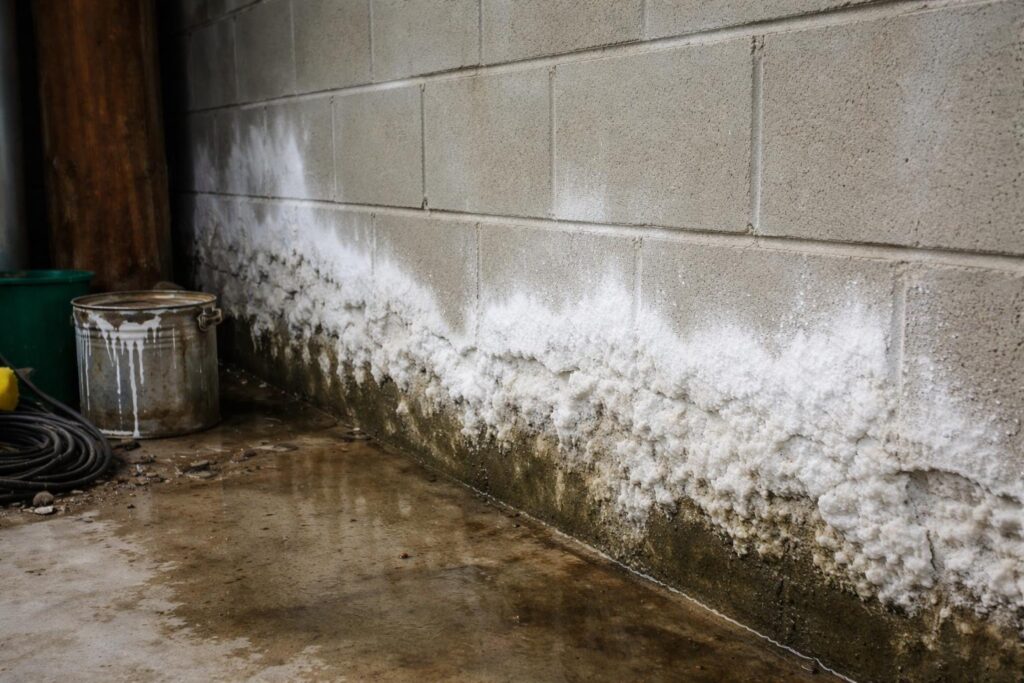
White mold is often confused with efflorescence, a harmless mineral deposit commonly found on concrete and brick.
However, the two require different solutions.
Although its colour may appear less concerning than black mold, white mold should not be ignored. Indoor mold growth can affect air quality, trigger respiratory irritation and signal an underlying moisture problem.
The good news is that small areas of surface mold can often be cleaned safely. More extensive contamination, particularly inside walls or insulation, requires a different approach.
The first step is to identify the substance, locate the moisture source and determine whether the affected material can be cleaned or needs replacing.
White mold can appear as a white, grey, or green powdery fungus depending on the surface it’s growing on. It includes multiple fungal species like penicillium and aspergillus.
White mold, although less notorious than black mold, can be equally harmful. It’s a frequent issue in many homes, often overshadowed by the fears surrounding black molds like Stachybotrys.
Yet, several white molds can cause health problems and structural damage. It is advised to get in touch with a nearby expert for mold removal in Toronto to get rid of white mold in your home.
Also Read – Mold & Real Estate ; Mold Issues When Buying or Selling Home
Table of Contents
What Does White Mold Look Like?
White mold typically appears as fuzzy, cotton-like, thread-like or powdery patches on damp surfaces. Its colour can range from bright white to pale grey, cream or slightly yellow, depending on the fungal species, surface and growing conditions.
Unlike an ordinary stain, some mold colonies develop a raised or irregular texture as fungal structures spread across the material.
Common Visual Signs of White Mold
- White fuzzy patches: Soft-looking growth resembling cotton or fine fibres, often found on wood and stored materials.
- Powdery white spots: Thin fungal colonies that may resemble dust or flour on furniture and other surfaces.
- White thread-like growth: Fine fungal filaments, sometimes called mycelium, spreading over damp organic material.
- Discoloured patches: Off-white, greyish or pale green growth that changes appearance as the colony develops.
- Recurring surface growth: White deposits that return after cleaning because the underlying moisture problem remains.
Does White Mold Have a Smell?
White mold may be accompanied by a damp, earthy or musty smell, especially in enclosed spaces such as basements, closets and wall cavities.
However, a musty odour does not identify a specific mold species. Some visible mold produces little noticeable smell, while hidden moisture damage can cause odours even when no growth is visible.
Can White Mold Change Colour?
Yes. Mold colonies can change colour as they mature, produce spores or respond to different environmental conditions. A colony that initially appears white may later become grey, greenish or another shade.
Colour and texture alone cannot reliably identify a fungal species or determine its health risk.
What Are the Common Types of White Mold Found in Homes?
Several fungal genera can produce white or light-coloured growth on indoor materials. Common examples include Aspergillus, Penicillium and Cladosporium, although none can be reliably identified by colour alone.
Aspergillus
Aspergillus is a widespread fungal genus found in soil, dust and indoor environments. Some species may appear white during early growth before developing green, yellow, brown or darker pigmentation.
Indoors, Aspergillus may grow on damp drywall, insulation, wood, dust and other materials where moisture is available.
Penicillium
Penicillium includes numerous species that can form white colonies during early development, although mature growth often becomes blue-green or green.
It may be found on water-damaged building materials, wallpaper, textiles and other damp organic surfaces.
Cladosporium
Cladosporium is commonly associated with indoor and outdoor air. Many species develop olive-green, brown or dark colonies, but some growth stages and structures may appear pale.
It can occur on damp painted surfaces, window frames, fabrics and other moisture-affected materials.
Can You Identify White Mold by Looking at It?
No. White, powdery or fuzzy growth is not enough to confirm a fungal genus or species. Different fungi can have similar appearances, and several non-fungal substances resemble mold.
Laboratory analysis can identify fungi when there is a specific reason to do so. However, homeowners generally do not need species identification before addressing visible indoor mold. Removing the growth and correcting the moisture source are the main priorities.
Also Read – Is Mold Dangerous To Your Health – Exposure Risks & Dangers
White Mold vs Efflorescence: How Can You Tell the Difference?
White mold usually looks fuzzy, soft, or cotton-like and may produce a musty odor. Efflorescence appears dry, chalky, and crystal-like with no smell. Mold grows on organic materials such as wood or drywall, while efflorescence forms on masonry surfaces like concrete or brick after moisture evaporates and leaves mineral deposits behind.
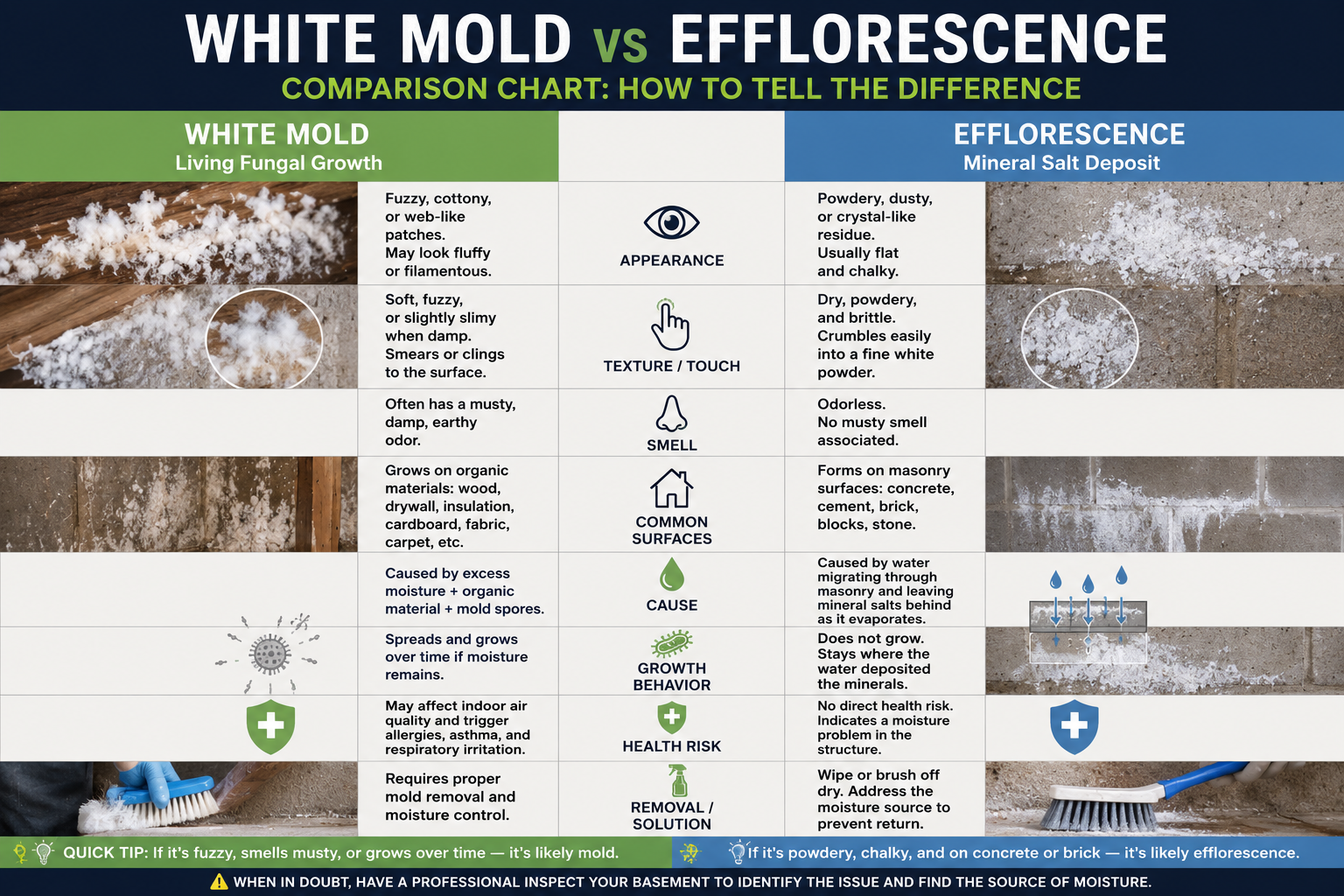
White mold and efflorescence can both appear as white deposits on basement walls. However, white mold is fungal growth, while efflorescence is a mineral salt deposit caused by moisture moving through masonry.
Efflorescence commonly appears when water travels through concrete, brick or mortar, dissolves soluble salts and leaves those salts behind as the surface dries.
White mold, by contrast, grows when fungi have enough moisture and nutrients. It is more commonly found on wood, paper, drywall and organic debris, although mold can also grow on dust or other organic material sitting on concrete.
| Feature | White Mold | Efflorescence |
|---|---|---|
| Cause | Fungal growth supported by moisture | Mineral salts deposited by water |
| Appearance | May be fuzzy, patchy or powdery | Usually chalky, crystalline or powdery |
| Common surfaces | Wood, drywall, fabric, dust-covered masonry | Concrete, brick, mortar |
| Odour | May produce a musty smell | Usually odourless |
| Growth | Develops where moisture and nutrients are available | Appears where water transports salts |
| Main concern | Mold contamination and moisture damage | Water intrusion or movement through masonry |
| Solution | Remove mold and correct moisture | Address water movement and clean deposits |
Is White Powder on Concrete Always Efflorescence?
No. White powder on a concrete basement wall is often efflorescence, but appearance alone is not definitive. Mold may grow on organic dust, dirt or coatings covering concrete.
A white deposit concentrated along foundation cracks or masonry joints may suggest mineral salts. Fuzzy growth extending onto adjacent wood, cardboard or drywall may suggest mold.
Avoid scraping, brushing or touching unidentified growth. If the material is difficult to identify, a moisture-focused inspection can help determine the cause without unnecessarily disturbing potential contamination.
Important: Efflorescence itself is not fungal growth, but it can reveal a moisture problem that may also support mold elsewhere in the basement.
Causes of White Mold Growth

White mold thrives in specific conditions:
- Water Damage: Persistent leaks or flooding can create the perfect environment for mold.
- Poor Ventilation: Areas with limited airflow, such as basements or attics, can become breeding grounds.
- Organic Material: Materials like wood, paper, and textiles can provide the necessary nutrients for mold growth.
Scenarios:
- Attic Renovation: Disturbing old insulation can release mold spores.
- Home Decor: Drilling into mold-infested drywall can spread spores.
- Basement Upgrades: Cutting moldy insulation can release spores.
Also Read – Pink Mold In Shower – Dangers, Causes & Removal [GUIDE]
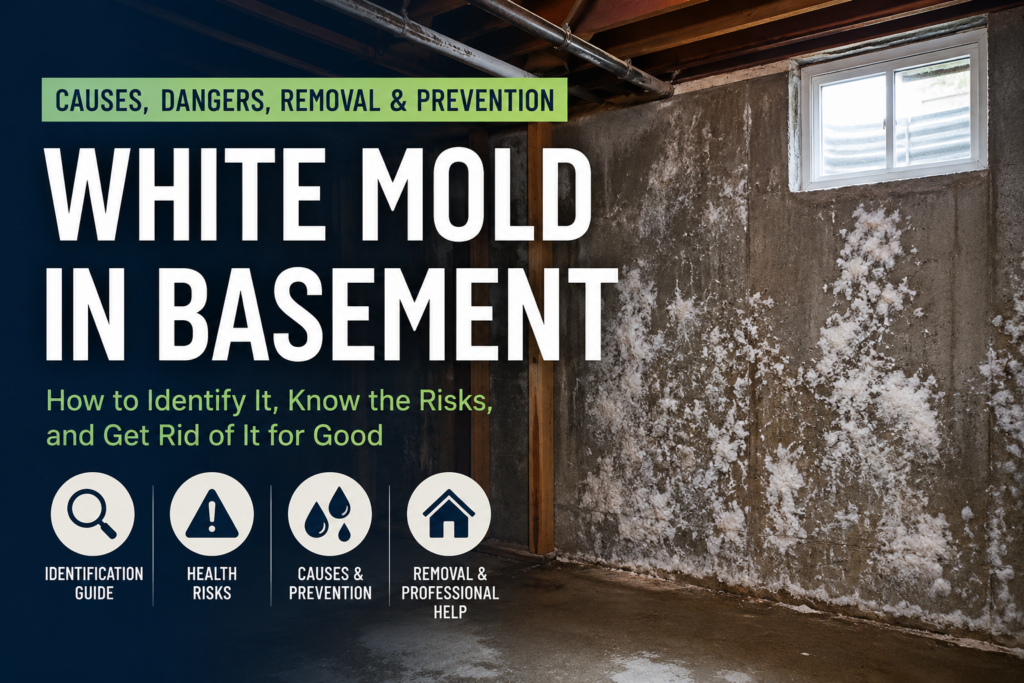
What Causes White Mold in Basements?
White mold in basements is usually caused by excess humidity, water intrusion, condensation, flooding, or poor airflow. Mold spores thrive when damp conditions persist on organic materials such as wood framing, drywall, insulation, carpet, or stored items. Even minor moisture problems can eventually lead to mold growth if the basement stays humid for long periods.
White mold does not appear randomly. In almost every case, it develops because excess moisture becomes trapped in a poorly ventilated area over time. Basements naturally create the perfect environment for fungal growth because they are cooler, darker, and more humid than the upper levels of a home.
Once moisture combines with organic materials like wood, drywall, cardboard, dust, or insulation, mold spores can begin colonizing surfaces quickly.
In many Ontario homes, the issue starts with a small humidity or seepage problem that goes unnoticed for months.
Is White Mold Dangerous to Your Health?
White mold can contribute to unhealthy indoor conditions, particularly when it grows extensively or remains untreated. Although a white colony may look less concerning than black mold, the colour of mold does not reliably indicate its potential health effects.
People living in damp or mold-affected homes may experience respiratory irritation, allergic symptoms or worsening asthma. However, the effects vary based on the extent of contamination, exposure conditions and individual susceptibility.
What Are the Symptoms of White Mold Exposure?
Exposure to indoor mold and damp environments may be associated with:
- Sneezing and nasal congestion
- Coughing or throat irritation
- Itchy, watery or irritated eyes
- Wheezing or shortness of breath
- Worsening asthma symptoms
- Other allergic reactions
These symptoms are not unique to white mold. Dust mites, pollen, other indoor allergens and respiratory illnesses can cause similar problems.
Who Is More Sensitive to Indoor Mold?
Some individuals are more vulnerable to health problems associated with indoor mold, including children, older adults, people with asthma or severe allergies, and those with weakened immune systems.
People with severely compromised immune systems may also face an increased risk of certain fungal infections.
Anyone experiencing persistent or worsening respiratory symptoms should consult a healthcare professional rather than relying on the colour or appearance of mold to identify a health risk.
Can White Mold Make You Sick Without Touching It?
Yes. Direct contact is not necessary for mold-related irritation. Fungal spores and fragments can become airborne, particularly when contaminated materials are disturbed.
The presence of mold does not mean every occupant will develop symptoms. Nevertheless, Health Canada recommends addressing visible indoor mold and the underlying moisture problem regardless of fungal type.
Is White Mold More Dangerous Than Black Mold?
White mold is not automatically safer or more dangerous than black mold. Both descriptions refer to the visible colour of fungal growth rather than a confirmed species or level of toxicity.
The term black mold is often associated with Stachybotrys chartarum, but many other molds can also appear dark. Likewise, white mold can involve several different fungal genera.
Some fungi can produce mycotoxins under certain conditions, but the presence or colour of mold does not establish whether these substances are present or whether occupants have experienced harmful exposure.
For homeowners, the more useful questions are:
- How much mold is growing?
- Is the growth visible or potentially concealed?
- Has the material remained wet?
- Is the contamination spreading or recurring?
- Are susceptible individuals occupying the space?
Regardless of whether mold appears white, green, grey or black, visible indoor growth should be removed and its moisture source corrected.
White Mold on Concrete Basement Walls
Many homeowners first notice white buildup on concrete walls or floors. This is where confusion begins.
Sometimes the substance is actually mold. Other times, it is efflorescence, a mineral salt deposit left behind by moisture moving through concrete.
A quick visual mold inspection is not always enough to tell the difference.
White mold on concrete may:
- look fuzzy or hairy
- spread unevenly
- appear near damp organic debris
- produce a musty smell
- return quickly after cleaning
Efflorescence usually appears:
- dry and chalky
- crystal-like
- odorless
- only on masonry surfaces
This distinction matters because mold indicates active microbial growth, while efflorescence points to a moisture problem inside the foundation.
What White Mold Smells Like
White mold often produces a damp, earthy, or musty odor. Some homeowners describe it as:
- wet cardboard
- old basement smell
- damp wood
- stale air after rain
If a basement smells musty even when no visible growth is present, hidden mold may already be growing behind drywall, under flooring, or inside insulation cavities.
How to Get Rid of White Mold Safely
Removing white mold requires cleaning or replacing contaminated materials, correcting the moisture problem and drying the affected area. Spraying a mold-killing product onto a surface without addressing its moisture source is unlikely to prevent future growth.
Small, accessible areas of surface mold may be suitable for careful household cleaning. Extensive contamination, hidden mold and damaged porous materials often require professional remediation.
Step 1: Identify and Stop the Moisture Source
Before cleaning, inspect the surrounding area for leaks, condensation, flooding or persistent humidity.
Check plumbing connections, basement walls, windows, roof penetrations and nearby appliances. Repair active water problems before attempting permanent restoration.
Step 2: Determine Whether DIY Cleaning Is Appropriate
Health Canada classifies mold growth as small when there are one to three patches, each smaller than one square metre (approximately 10 square feet).
Some small or moderate areas may be cleaned by homeowners. However, professional assistance is advisable for extensive contamination, recurring mold, significant water damage or situations involving occupants with greater health risks.
Do not disturb suspected mold inside HVAC systems or open contaminated wall cavities without appropriate assessment and precautions.
Step 3: Wear Appropriate Protective Equipment
For suitable small-scale cleaning, Health Canada recommends:
- An N95 respirator
- Protective goggles
- Disposable household gloves
Keep susceptible individuals away from the cleaning area. Avoid dry brushing, sanding or using ordinary household vacuums on contaminated surfaces because these activities may spread fungal particles.
Step 4: Clean Suitable Hard Surfaces
For small areas of mold on appropriate cleanable surfaces, use water and unscented dish detergent.
Gently remove visible growth without unnecessarily dispersing dust or saturating the material. Dry the surface completely after cleaning.
Health Canada does not recommend bleach as a necessary part of routine household mold cleanup.
Materials that are heavily contaminated, deteriorated or difficult to clean may need replacement rather than surface treatment.
Step 5: Assess Porous and Water-Damaged Materials
Drywall, carpeting, insulation and other absorbent materials may retain mold within their structure.
If contamination extends beyond the surface or materials have been damaged by prolonged moisture, professional removal and replacement may be necessary.
Never paint over active mold or conceal contamination behind new building materials.
Step 6: Dry the Area and Prevent Regrowth
After cleanup, maintain appropriate indoor humidity, repair leaks and confirm that affected materials are dry.
Use a dehumidifier where necessary and monitor the area for recurring stains, condensation or musty odours.
If mold returns, the moisture source may still be active or contamination may remain inside adjacent materials.
The goal of mold remediation is not simply to make the surface look clean. It is to remove contamination, restore dry conditions and prevent further growth.
Also Read – Mold On Plant Soil – Causes, Types & How To Kill Plant Mold?
When Should You Hire a Professional for White Mold Removal?
Professional mold remediation is recommended when contamination is extensive, recurring, difficult to access or associated with significant water damage.
According to Health Canada, an area of mold larger than three square metres (approximately 32 square feet) is considered extensive. Smaller areas may also require professional attention depending on the materials, occupants and conditions involved.
You should contact a professional mold remediation company in Toronto if white mold keeps returning, covers a large area, produces strong musty odors, follows flooding or water damage, or appears inside walls, ceilings, insulation, or HVAC systems. Professional remediation focuses on both mold removal and identifying the moisture source allowing the growth to continue.

What Happens During Professional White Mold Remediation?
A qualified remediation company should assess the extent of contamination, identify contributing moisture conditions and determine which materials can be cleaned or need removal.
Depending on the project, remediation may include containment, controlled removal of contaminated materials, HEPA-filtered cleaning, drying and post-cleanup assessment.
Extensive remediation involving structural components may also warrant independent post-remediation verification.
Do You Need Mold Testing Before Removal?
Not always. Visible indoor mold usually provides sufficient reason to investigate moisture and arrange cleanup.
Health Canada does not generally recommend routine indoor mold air testing because results often provide limited information about the cause or potential health effects.
Targeted investigation or testing may be useful when hidden contamination is suspected and the source cannot be established through inspection.
For homeowners in Toronto and the Greater Toronto Area, Ultimate Mold Crew provides mold inspection and mold removal services to help assess contamination and determine an appropriate remediation approach.
How Do You Remove White Mold From Wood, Drywall and Concrete?
White mold removal depends on the affected material. A washable hard surface may be cleaned successfully, while contaminated insulation or deteriorated drywall may require replacement.
How to Remove White Mold From Wood
White mold may grow on wooden furniture, exposed basement framing, floor joists and attic sheathing when moisture remains present.
Small areas of superficial growth on sound, accessible wood may be cleaned using appropriate protective equipment and mild detergent, followed by thorough drying.
However, unfinished or deeply contaminated wood can be harder to clean. Large growth areas, recurring moisture and structural damage require professional assessment.
If wood feels soft, crumbles or shows signs of decay, the problem may involve wood-rotting fungi in addition to surface mold.
How to Remove White Mold From Drywall
Drywall presents a different challenge because its paper facing and gypsum core can retain moisture.
Minor surface contamination on otherwise sound, dry material may sometimes be addressed through careful cleaning. However, swollen, soft, water-damaged or extensively moldy drywall generally needs to be removed and replaced.
Painting over stained drywall does not correct contamination behind the surface.
How to Remove White Mold From Concrete
First, determine whether the white material is mold or efflorescence.
Concrete itself does not provide the same organic nutrients as wood or paper, but mold can develop on dust, dirt, coatings and other material covering damp concrete.
Small contaminated areas on accessible, cleanable surfaces may be scrubbed with detergent and water, then dried thoroughly.
If groundwater seepage, foundation cracks or condensation continues, the problem is likely to return until the moisture source is corrected.
How to Remove White Mold From Furniture and Fabric
Furniture, upholstery, clothing and stored fabrics can develop white fungal growth in humid basements and enclosed closets.
Hard, washable furniture surfaces may be suitable for careful cleaning. Some clothing and removable textiles may be laundered according to their care instructions and dried completely.
Heavily contaminated upholstery, mattresses, particleboard furniture and other difficult-to-clean porous items may need disposal, particularly following prolonged water damage.
What About White Mold in Attics?
White mold on attic sheathing or rafters often indicates a moisture-control problem involving condensation, roof leakage, air leakage or inadequate ventilation.
Attic remediation should address the moisture mechanism before treating or replacing affected materials.
Large contaminated attic areas should be assessed by a qualified remediation professional because disturbing fungal growth and insulation can spread particles into occupied spaces.
How Can You Prevent White Mold From Coming Back?
Preventing white mold starts with moisture control. Removing visible growth without fixing leaks, condensation or high humidity allows conditions for mold to return.
Maintain Indoor Humidity Between 30% and 50%
Use a hygrometer to monitor humidity, especially in basements, laundry rooms and enclosed storage spaces.
A dehumidifier can help during humid weather. Empty and clean its reservoir regularly, and ensure collected water drains safely.
Repair Leaks and Water Intrusion
Inspect plumbing, windows, roofing and foundation walls for moisture problems.
Keep gutters clear, direct downspouts away from the foundation and correct drainage issues that allow rainwater to accumulate near basement walls.
Improve Ventilation Without Introducing More Moisture
Use bathroom exhaust fans during and after showers. Ensure dryers and exhaust systems vent outdoors.
Ventilate during suitable dry weather, but avoid opening basement windows when outdoor air is humid enough to increase condensation on cool indoor surfaces.
Keep Stored Materials Away From Damp Surfaces
Avoid placing cardboard boxes, clothing and upholstered furniture directly against basement foundation walls.
Store belongings on raised shelving and use moisture-resistant containers where practical.
Dry Water-Damaged Materials Promptly
Investigate spills, leaks and flooding immediately. Dry affected building materials as soon as possible and replace materials that cannot be cleaned or dried adequately.
If mold reappears after cleanup, investigate hidden moisture rather than repeatedly treating the surface.
FAQS – White Mold
Frequently Asked Questions About White Mold
Is White Mold Dangerous?
White mold may contribute to allergic reactions, respiratory irritation and worsening asthma. Its colour does not establish its toxicity. Visible indoor mold should be removed, and the source of moisture corrected.
What Kills White Mold Permanently?
No cleaning product prevents mold permanently if moisture remains. Effective control requires removing contamination, drying the affected materials and repairing the conditions that allowed mold to grow.
Can White Mold Grow on Concrete?
Yes. Mold can develop on organic dust, coatings or debris covering damp concrete. However, white powder on bare concrete is often efflorescence, a mineral deposit caused by water movement.
Is White Mold on Wood Dangerous?
White mold on wood indicates excess moisture and potential indoor air quality concerns. Surface mold does not necessarily mean structural rot, but prolonged dampness can also encourage wood-decaying fungi.
Can White Mold Spread Through a House?
Mold spores and fragments can travel through indoor air, but new growth requires suitable moisture and nutrients. Disturbing contaminated materials can spread particles into other areas.
Should You Use Bleach to Remove White Mold?
Health Canada recommends water and dish detergent for suitable small-scale household mold cleaning. Bleach is not generally needed. Porous, damaged or extensively contaminated materials may require replacement.
Do You Need to Test White Mold Before Removing It?
Usually not. Visible indoor mold should be addressed regardless of species. Testing may be useful in specific investigations involving suspected hidden contamination or unresolved moisture problems.
Why Does White Mold Keep Coming Back?
Recurring white mold usually indicates unresolved moisture, incomplete cleanup or contamination inside adjacent materials. Leaks, condensation, high humidity and concealed water damage are common contributing factors.
Also Read Mold Testing – The Role of Mold Testing And Its Benefits [GUIDE]
Further Reading
- https://www.ecofmr.com/articles/understanding-white-mold-types-causes-prevention-treatment/
- https://www.epa.gov/mold/brief-guide-mold-moisture-and-your-home
- https://www.cdph.ca.gov/Programs/CCDPHP/DEODC/EHLB/IAQ/CDPH%20Document%20Library/MMIMH_112017_ADA.pdf
- “White mold, caused by Paecilomyces penicillatus, has been identified as the causative agent of white mold on cultivated Morchella, which is a serious threat to morel production in China.”
https://consensus.app/details/white-mold-caused-paecilomyces-penicillatus-identified-he/68fcb824630057c394a6ca419ec400f2/ - “White mold resistance screening can be improved by knowledge of isolate genotypic and phenotypic characteristics.”
https://consensus.app/details/white-mold-resistance-screening-improved-knowledge-ottohanson/8ce0d7ec836c5d11aa77bf420a6aaea0/
Peer Reviewed References
- Centers for Disease Control and Prevention. (2024). Mold: Basic Facts – health effects, susceptible populations, and cleanup guidance. Retrieved from https://www.cdc.gov/mold
- U.S. Environmental Protection Agency. (2024). A Brief Guide to Mold, Moisture, and Your Home (EPA 402-K-02-003). Retrieved from https://www.epa.gov/mold/brief-guide-mold-moisture-and-your-home
- U.S. Environmental Protection Agency. (2024). Mold Remediation in Schools and Commercial Buildings (EPA 402-K-01-001). Retrieved from https://www.epa.gov/mold/mold-remediation-schools-and-commercial-buildings-guide
- Health Canada. (2023). Residential Indoor Air Quality Guidelines: Mould. Retrieved from https://www.canada.ca/en/health-canada/services/publications/healthy-living/residential-indoor-air-quality-guidelines-mould.html
- Canada Mortgage and Housing Corporation. (2024). Moisture and Mold in Housing. Retrieved from https://www.cmhc-schl.gc.ca
- National Institute for Occupational Safety and Health. (2024). Mold in the Workplace. Retrieved from https://www.cdc.gov/niosh/topics/mold
- Institute of Inspection, Cleaning and Restoration Certification (IICRC). (2015). IICRC S520 Standard and Reference Guide for Professional Mold Remediation (3rd ed.). Las Vegas, NV: IICRC.
- American Industrial Hygiene Association (AIHA). (2016). Field Guide for the Determination of Biological Contaminants in Environmental Samples (2nd ed.). Fairfax, VA: AIHA.
- New York City Department of Health and Mental Hygiene. (2008). Guidelines on Assessment and Remediation of Fungi in Indoor Environments. Retrieved from https://www.nyc.gov/site/doh/health/health-topics/mold.page
- World Health Organization. (2009). WHO Guidelines for Indoor Air Quality: Dampness and Mould. Copenhagen: WHO Regional Office for Europe. ISBN 978-92-890-4168-3. https://www.who.int/publications/i/item/9789289041683
- National Research Council. (2004). Damp Indoor Spaces and Health. Washington, DC: The National Academies Press. https://doi.org/10.17226/11011
- Portland Cement Association. (2024). Efflorescence: Causes, Prevention, and Repair. Retrieved from https://www.cement.org
- American Lung Association. (2024). Mold and Your Health. Retrieved from https://www.lung.org/clean-air/at-home/indoor-air-pollutants/mold-and-dampness
