

Updated on 22-Sep-2026
Finding mold in your refrigerator usually means moisture, food residue or spoiled food has given fungal spores a place to grow.
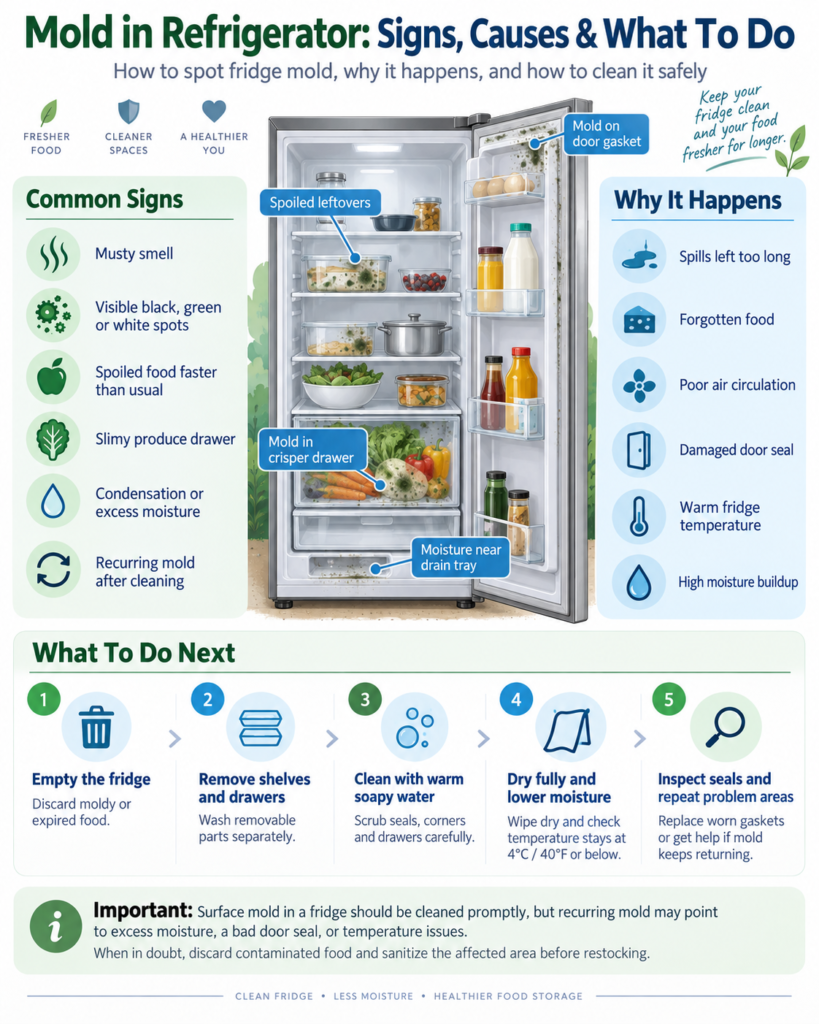
You may first notice fuzzy green or white growth on forgotten leftovers. In other cases, mold appears as dark spots around the refrigerator door gasket, underneath a crisper drawer or near an area where condensation collects.
A refrigerator slows microbial growth, but cold temperatures do not make food or the appliance mold-proof. USDA confirms that some molds can grow at refrigerator temperatures.
The first step is to determine where the mold is growing.
Mold growing on food is primarily a food-safety issue. Mold growing repeatedly on refrigerator surfaces, door seals or around moisture-prone components may indicate a cleaning, temperature, drainage or condensation problem.
There is another situation homeowners should watch for: moisture leaking from the refrigerator into the surrounding kitchen. A damaged water line, drain or ice-maker connection can wet drywall, cabinets, flooring or the wall behind the appliance and create a larger indoor mold problem.
This guide explains how to tell these situations apart, what food should be discarded, how to clean mold from a refrigerator safely and what to investigate when the mold keeps returning.
Also Read – Mold Issues With Front Load Washers Solved [GUIDE]
Table of Contents
Understanding Refrigerator Mold

What Is Mold in a Refrigerator?
Mold is fungal growth that develops when spores have access to moisture and a source of organic material.
Inside a refrigerator, that organic material may be:
- spilled food or drinks
- crumbs and food residue
- forgotten leftovers
- spoiled fruits and vegetables
- residue trapped inside a rubber door gasket
- moisture collecting underneath drawers
Mold can appear green, white, blue, grey, brown or black. Colour alone cannot identify the mold species or tell you whether it presents a greater health risk.
The EPA specifically notes that “black mold” is not a particular species or category of mold. Different molds can appear dark in colour, and you cannot determine whether a mold is producing mycotoxins just by looking at it.
Can Mold Really Grow in a Cold Refrigerator?
Yes.
Refrigeration slows the growth of many microorganisms, but it does not sterilize food or refrigerator surfaces.
USDA states that mold can grow at refrigerator temperatures. Some molds also tolerate salt and sugar well, which explains why growth can occur on refrigerated jams, cured meats and other foods.
The practical goal is therefore to combine proper refrigeration with moisture control, clean surfaces and good food-storage practices.
Is Mold in the Refrigerator Dangerous?
Mold inside a refrigerator should be dealt with promptly, especially when it is growing directly on food.
Some people are sensitive to mold and may experience allergic or respiratory symptoms when exposed to fungal spores. CDC lists symptoms such as nasal congestion, coughing, wheezing, irritated eyes and skin reactions among possible mold-related effects in susceptible individuals.
Food safety is a separate issue.
Some molds can produce mycotoxins under certain conditions, and food with visible mold can also have fungal growth or bacteria beneath the surface that cannot be seen.
This is why simply removing the visible spot is not safe for many foods.
You also should not smell moldy food closely to determine whether it is still edible. USDA specifically advises against sniffing moldy food because spores can be inhaled.
- The sources include refrigeratorplanet.com, https://www.housedigest.com, cdc.gov, well.org, health.clevelandclinic.org, healthline.com, fsis.usda.gov, epa.gov
Is Black Mold in a Refrigerator Dangerous?
Dark mold inside a refrigerator is often described online as “black mold,” but colour does not identify a mold species.
Black, dark green or grey fungal colonies can belong to many different genera.
The EPA specifically states that “black mold” is not a specific type of mold, and mold colour does not indicate whether the growth is producing mycotoxins.
This means you should focus less on identifying the mold by colour and more on:
- removing contaminated food
- cleaning the affected surface
- correcting moisture
- checking refrigerator temperature
- investigating recurrent growth
A laboratory species identification is generally unnecessary for routine refrigerator cleaning.
Causes of Mold Growth in Refrigerators
1. Forgotten or Spoiled Food
Old produce, leftovers and opened containers provide organic material and moisture that support fungal growth.
One moldy strawberry or forgotten container can release spores into the surrounding area, so remove spoiled food promptly.
2. Spills and Food Residue
Milk, juice, sauces and food residue may collect underneath drawers, along shelf edges and inside gasket folds.
These small areas are easy to miss during normal cleaning.
3. Condensation
Warm, humid kitchen air enters every time the refrigerator door opens.
When that air contacts cold refrigerator surfaces, moisture can condense. Persistent condensation deserves attention because mold needs moisture to continue growing.
4. A Damaged Refrigerator Door Seal
The gasket around the refrigerator door is a common mold location.
Its folds can trap moisture and food particles. A worn or damaged gasket may also allow warm humid air into the refrigerator, increasing condensation.
5. Poor Air Circulation
An overpacked refrigerator can restrict cold-air circulation.
Both Health Canada and the FDA advise against packing a refrigerator so tightly that cold air cannot circulate properly.
6. Refrigerator Temperature Is Too High
Health Canada recommends keeping the refrigerator at 4°C (40°F) or below.
Use a refrigerator thermometer rather than relying only on the appliance’s temperature dial.
7. Drainage or Drip-Pan Problems
Some refrigerators collect condensation through drainage systems and drip pans.
A blocked drain, stagnant water or dirty drip pan can create persistent moisture and odours. Check the manufacturer’s maintenance instructions before accessing internal components.
Where Does Refrigerator Mold Usually Hide?
Check:
- refrigerator door gasket folds
- crisper drawers
- underneath removable drawers
- shelf seams and corners
- containers holding forgotten food
- back interior wall
- condensation channels
- drain openings
- water and ice dispenser areas
- drip pan, where accessible
- underneath the refrigerator
- wall, baseboard and cabinets beside or behind the appliance
This gives you semantic coverage for mold on refrigerator seal, mold in fridge drawer, black mold in refrigerator gasket, and mold behind refrigerator without making separate thin pages.
Do You Have to Throw Away Everything If You Find Mold in the Fridge?
Usually, no.
Finding one moldy item does not automatically mean every sealed food item in your refrigerator needs to be discarded.
However, USDA advises checking foods that were touching or immediately surrounding the moldy item because spores can spread.
The type of food also matters.
| Moldy food | What to do |
|---|---|
| Bread and baked goods | Discard |
| Soft fruits and vegetables | Discard |
| Yogurt and sour cream | Discard |
| Soft cheese | Discard |
| Cooked leftovers | Discard |
| Luncheon meat, bacon and hot dogs | Discard |
| Jams and jellies | Discard |
| Hard cheese such as cheddar | Some may be salvaged by cutting at least 1 inch around and below the mold |
| Firm vegetables such as carrots or cabbage | Some may be salvaged by cutting well around the affected area |
| Hard salami or dry-cured country ham | Certain surface molds may be removed according to USDA guidance |
High-moisture foods are particularly important to discard because mold can penetrate below the visible surface.
If you are unsure about a food item, the safer approach is to discard it
How to Prevent Mold From Coming Back
A mold-free refrigerator depends on controlling food spoilage, temperature and moisture.
Keep the Refrigerator at 4°C or Below
Use an appliance thermometer to verify the actual temperature.
Check Leftovers Regularly
Health Canada recommends consuming or freezing most cooked leftovers within four days.
Clean Spills Immediately
Food residue and liquids provide both nutrients and moisture.
FDA specifically recommends wiping refrigerator spills promptly.
Store Food in Covered Containers
Covered containers reduce spills, odours and contact between foods.
Do Not Overpack the Refrigerator
Cold air needs room to circulate.
Clean the Door Gasket
Inspect the gasket folds periodically and remove food residue and moisture.
Keep Produce Drawers Clean
Remove spoiled produce before decomposition spreads to nearby foods.
Investigate Persistent Condensation
Recurring moisture can point to:
- frequent door opening
- a damaged gasket
- temperature problems
- blocked airflow
- drainage issues
Fixing the moisture condition is more effective than repeatedly cleaning the same mold patch.
References
- https://www.thekitchn.com/refrigerator-we-have-a-problem-130210
- https://www.merrymaids.com/cleaning-tips/tidy-home/6-ways-to-keep-mold-from-taking-over-your-fridge/
How to Clean Mold From a Refrigerator
Step 1: Remove the Food
Take everything out of the refrigerator.
Place safe perishable foods into another refrigerator or a cooler so they remain cold while you clean.
Discard foods that are moldy, spoiled or unsafe.
Step 2: Unplug the Refrigerator if Appropriate
For a deeper cleaning, unplugging the refrigerator may make it safer to remove components and work around the interior.
Follow the manufacturer’s instructions for your particular appliance.
Step 3: Remove Shelves and Drawers
Take out removable shelves, bins and crisper drawers.
Be careful with glass shelves. Allow cold glass to move closer to room temperature before exposing it to hot water because rapid temperature changes can cause cracking.
Step 4: Wash Removable Components
Wash removable parts with warm water and dish soap.
Pay particular attention to:
- corners
- shelf tracks
- drawer edges
- handles
- areas where food residue has collected
Rinse and dry everything completely.
Step 5: Clean the Refrigerator Interior
USDA recommends cleaning refrigerator interiors periodically with 1 tablespoon of baking soda dissolved in 1 quart of water, followed by rinsing and drying.
Warm soapy water can also be used for normal refrigerator cleaning.
Follow the appliance manufacturer’s cleaning recommendations because some finishes, plastics and coatings can be damaged by aggressive products.
Step 6: Clean the Door Gasket
Pull back the folds of the refrigerator gasket carefully.
Food residue and condensation can accumulate in areas that are difficult to see.
Use a soft cloth or soft toothbrush with a manufacturer-approved cleaning solution. Avoid damaging or stretching the gasket.
Dry the seal thoroughly afterward.
Step 7: Inspect Drain and Moisture Areas
If mold keeps returning, check areas where water collects.
Depending on the refrigerator model, this may include:
- drain openings
- drain tubes
- drip pans
- water dispenser components
- ice-maker connections
Do not dismantle components that the manufacturer recommends servicing professionally.
Step 8: Dry Everything Before Restocking
Moisture is the main condition mold needs.
Dry the walls, shelves, drawers and seals before returning food to the refrigerator.
Step 9: Confirm the Temperature
Place an appliance thermometer inside the refrigerator.
Health Canada recommends 4°C (40°F) or lower.
Never Mix Cleaning Chemicals
Do not mix bleach with vinegar, ammonia or other household cleaners.
Chemical mixtures can release dangerous fumes.
Follow product labels and your refrigerator manufacturer’s cleaning instructions.
Dealing with Persistent Mold Issues
When to Call a Professional – If mold persists despite regular cleaning, it might be time to consult a professional.
User Solutions for Stubborn Mold – Some users recommend stronger cleaning agents or professional mold removal services in Toronto for recurring issues.
FAQs: Mold in Refrigerator
Can mold grow inside a refrigerator?
Yes. Refrigeration slows mold growth but does not eliminate it. USDA confirms that certain molds can grow at refrigerator temperatures, particularly when moisture and food residue are available.
What causes mold inside a refrigerator?
Common causes include spoiled food, spills, condensation, dirty door gaskets, blocked airflow, temperatures above 4°C and persistent moisture around drains or drip pans.
Should I throw everything away if one item in my fridge has mold?
No. Inspect nearby foods and discard moldy or contaminated items. Sealed foods generally do not need to be thrown away solely because another item developed mold. Soft and high-moisture foods with visible mold should usually be discarded.
Can mold spread from one food to another in the refrigerator?
Mold produces spores that can spread through air and contact. USDA recommends checking nearby foods and cleaning the refrigerator area where moldy food was stored.
Can I cut mold off food and eat the rest?
It depends on the food.
Mold can penetrate deeply into soft and high-moisture foods, so these foods should usually be discarded. Some hard cheeses and firm vegetables may be salvageable by cutting well beyond the affected area according to USDA food-safety guidance.
What temperature should my refrigerator be?
Health Canada recommends keeping the refrigerator at 4°C (40°F) or lower and the freezer at −18°C (0°F) or lower.
Why is mold growing on my refrigerator door seal?
Door gaskets contain folds and crevices where condensation, crumbs and food residue can collect. A damaged seal may also allow warm humid air to enter the refrigerator and increase condensation.
Is black mold in a refrigerator toxic?
Colour alone cannot identify the mold or determine whether it is producing mycotoxins. “Black mold” is not a specific mold species. Clean the growth and correct the moisture condition regardless of colour.
Why does mold keep coming back after I clean my refrigerator?
Recurring refrigerator mold usually means one of the underlying conditions remains. Check for food residue, condensation, a damaged gasket, poor air circulation, excessive refrigerator temperature, clogged drainage or persistent moisture.
Can mold grow behind a refrigerator?
Yes. A leaking water supply, ice-maker line, drain pan or other moisture source can wet flooring, drywall and cabinets behind the appliance. Mold in building materials should be treated differently from surface mold inside the refrigerator.
