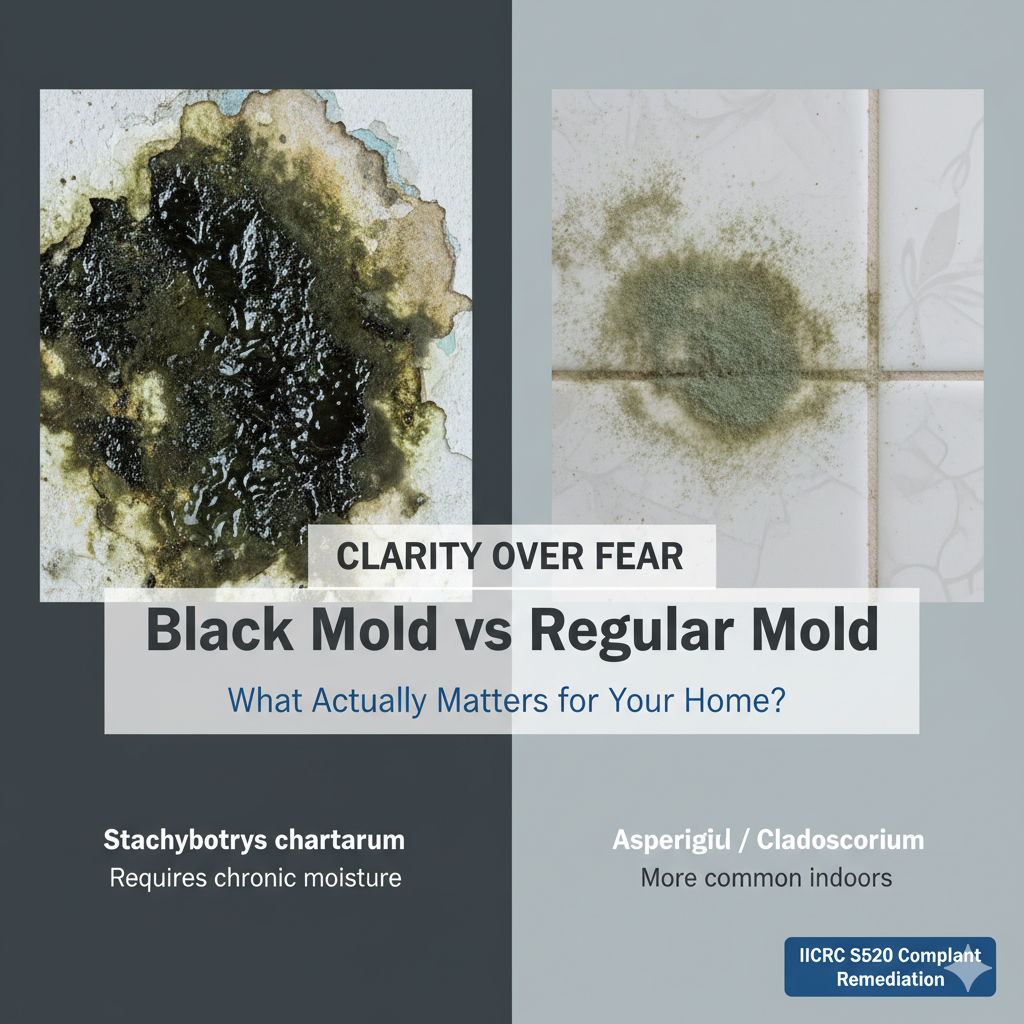
Black mold vs regular mold comparison showing Stachybotrys chartarum and common indoor mold species

Black Mold vs Regular Mold: What’s the Real Difference?

Difference between black mold and regular mold explained The difference between black mold and regular mold is often overstated. Black mold usually refers to Stachybotrys chartarum,a species that can grow on chronically wet materials. Common indoor molds such as Aspergillus and Penicillium are far more prevalent in homes. Color alone does not determine toxicity. Species […]
Read more
protective gear for mold removal

Cross-Contamination Due To Improper Mold Containment

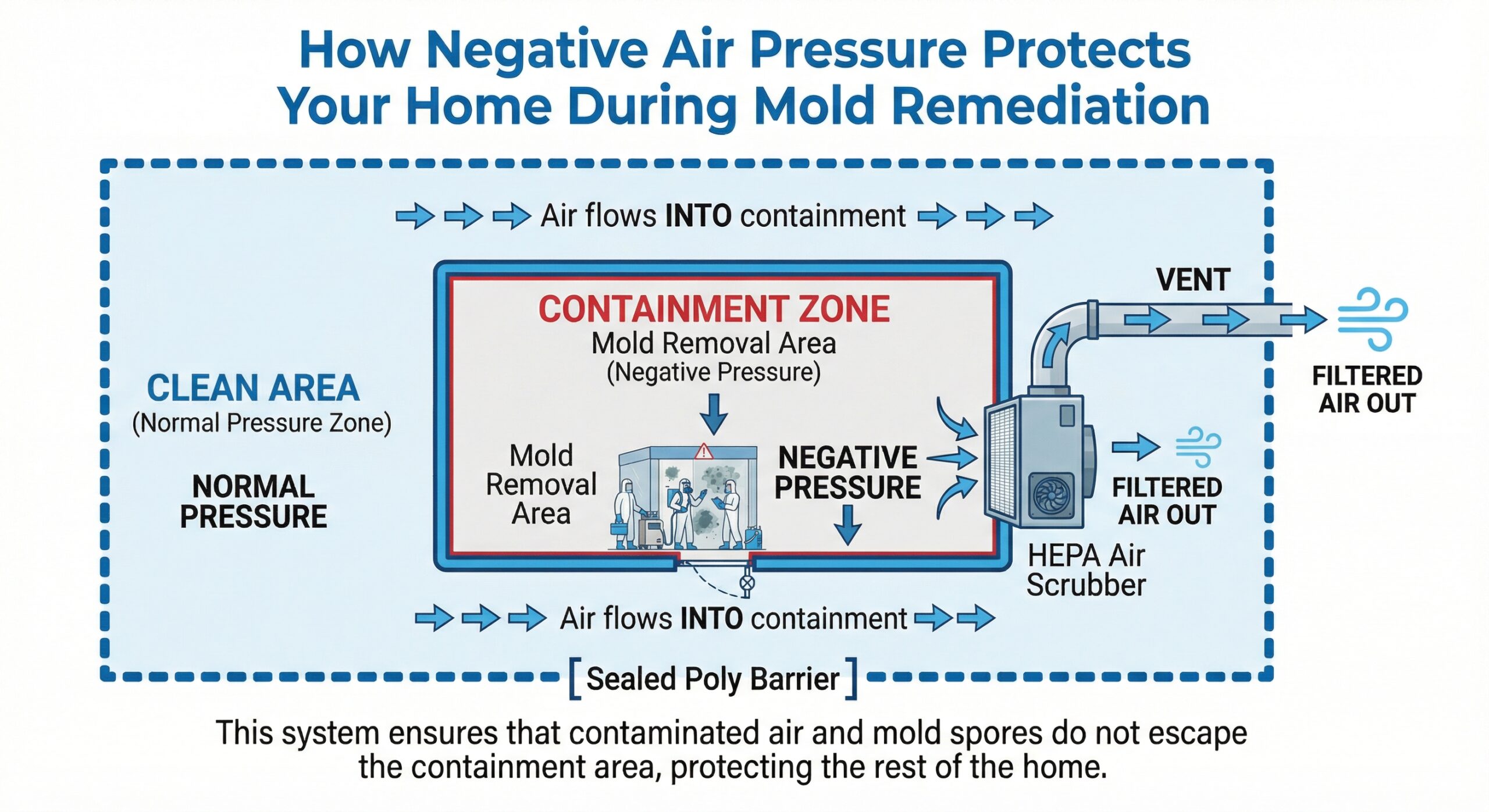
 Containment is the backbone of mold remediation. When containment fails, remediation does not simply underperform. It actively spreads contamination into clean areas of a building. Cross-contamination is one of the most common reasons mold returns after cleanup, and one of the most frequent causes of failed post-remediation clearance. Understanding how improper containment causes this spread […]
Read more
IICRC S520 Mold Remediation Standards

ANSI/IICRC S520 Standards For Professional Mold Remediation

ANSI/IICRC S520 Mold Remediation Standards Mold in a home is not just a cosmetic issue. Mold → releases → microscopic spores Spores → affect → indoor air quality Moisture → drives → mold growth In Toronto and the GTA, long winters, basement humidity, attic condensation, and water damage from leaks create ideal fungal growth conditions. […]
Read more
How To Identify Signs of Water Damage to Your Basement?

Is Winter the Worst Time for Hidden Mold in Basements?

Quick Answer Yes. Winter is the highest-risk season for hidden mold growth in Toronto basements. Cold outdoor temperatures, snow melt, sealed indoor air, and elevated basement humidity create long-lasting moisture conditions. Mold often develops behind finished basement walls, under flooring, and near foundation areas before any visible signs appear. Why Basements Behave Differently in Winter […]
Read more

How Condensation Behind Walls Causes Winter Mold in Homes?

Quick Answer   Condensation behind walls causes winter mold in Toronto homes when warm, humid indoor air meets cold exterior wall surfaces. Moisture forms inside wall cavities, dampening drywall, insulation, and framing. When this moisture persists, mold growth begins out of sight and spreads before visible signs appear. Why Hidden Wall Mold Is Common in Toronto […]
Read more
How-to-Remove-Mold-from-Canvas-Fabric-Steps-2

Why Mold Growth Increases in Toronto Homes During Winter?

Quick Answer   Mold growth increases in Toronto homes during winter because indoor moisture becomes trapped. Sealed windows, cold exterior walls, and higher indoor humidity create condensation inside wall cavities, basements, and ceilings. Mold does not need warmth. It needs moisture, organic material, and time. Winter provides all three. Winter Mold Is a Toronto-Specific Problem Toronto […]
Read more
Capillary Action and Mold

How Does Capillary Action Causes Mold Behind Walls?

Capillary action allows moisture to travel inside walls without visible leaks, causing hidden mold growth behind finished surfaces. Learn how it happens. Hidden mold behind finished walls is one of the most misunderstood moisture problems in buildings. Many property owners assume mold requires a visible leak or flooding event. In reality, mold often develops silently […]
Read more