
Updated on 22-Sep-2026
Fall is a useful time to inspect a Toronto home for mold because the change from warm, humid weather to cooler temperatures can reveal moisture problems that were difficult to see during summer.
A basement may still contain moisture from humid summer conditions. At the same time, windows, exterior walls, attic sheathing and other surfaces begin getting colder at night. Rain also starts testing roofs, gutters, foundations and exterior drainage systems.
These conditions can expose a problem before winter seals the house for several months.
A fall mold inspection becomes especially useful if your home has developed a musty smell, recurring condensation, water staining, damp basement materials or dark staining in the attic.
There is no reason to wait for fall if you already have visible mold or active water damage. Moisture problems should be investigated when they appear.
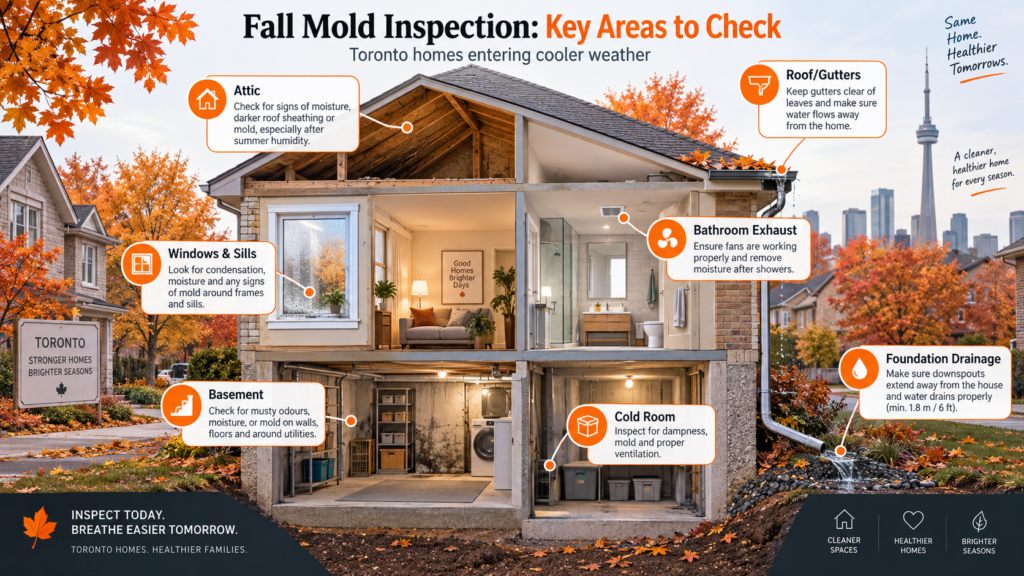
Table of Contents
Why Mold Problems Can Become More Noticeable in Fall
The transition out of summer changes how moisture behaves inside a house.
Natural Resources Canada has identified an interesting fall moisture pattern that many homeowners never consider. Materials inside a house can release moisture absorbed during summer as temperatures change. Its residential moisture guidance estimates that summer moisture stored in the building can contribute roughly 20 to 40 litres of moisture per week for about four weeks during fall.
At the same time, outdoor temperatures begin falling.
Warm indoor air can then contact colder glass, roof sheathing, exterior walls and other building surfaces. If those surfaces become cold enough, condensation can develop.
This is why a home that seemed dry in August can begin showing window condensation or a musty smell several weeks later.
Fall also introduces another variable: rain.
Heavy rainfall can reveal weaknesses around roofing, flashing, gutters, downspouts, foundations and basement walls. Health Canada recommends keeping eavestroughs and downspouts clear and directing their discharge away from the foundation as part of household mold prevention.
For a mold inspector, fall therefore provides several useful clues at the same time.
The First Cold Nights Can Tell You a Lot About Your Home

One of the best times to pay attention to moisture is after Toronto experiences its first run of cool nights.
Walk through the house the following morning.
Look at window corners, sills, exterior wall corners, basement walls, cold rooms and bathroom ceilings. Pay attention to any area that suddenly feels damp or develops condensation.
A little temporary fogging on glass does not confirm a mold problem. Repeated water accumulation deserves more attention because surrounding wood, drywall, caulking and insulation can remain damp.
An attic can tell a similar story.
Warm indoor air can move upward through ceiling openings, attic hatches, plumbing penetrations and gaps around fixtures. Bathroom exhaust ducts can also introduce moisture when they are damaged, disconnected or improperly vented.
Once the roof deck becomes colder, moisture reaching the attic has a greater chance of condensing on roof sheathing.
This is one reason an attic mold inspection in Toronto can become especially useful as heating season approaches.
Where We Pay Extra Attention During a Fall Mold Inspection
Fall mold problems tend to follow recognizable moisture patterns.
| Area of the home | Fall warning sign | What may need investigation |
|---|---|---|
| Attic | Dark roof sheathing, damp insulation, musty smell | Air leakage, bathroom exhaust, roof leak, ventilation |
| Basement | Musty odour after rain | Foundation seepage, drainage, finished wall cavities |
| Cold room | Condensation or mold behind boxes | Cold concrete, humidity, water entry |
| Windows | Recurring water on glass or sill | Indoor humidity, cold surfaces, airflow |
| Bathroom | Ceiling spots returning | Exhaust performance, condensation, attic ducting |
| Exterior wall | Mold behind furniture | Cold wall surface, restricted airflow, hidden moisture |
| Furnace/HVAC area | Musty smell when heating starts | Damp filters, humidifier, nearby materials or HVAC components |
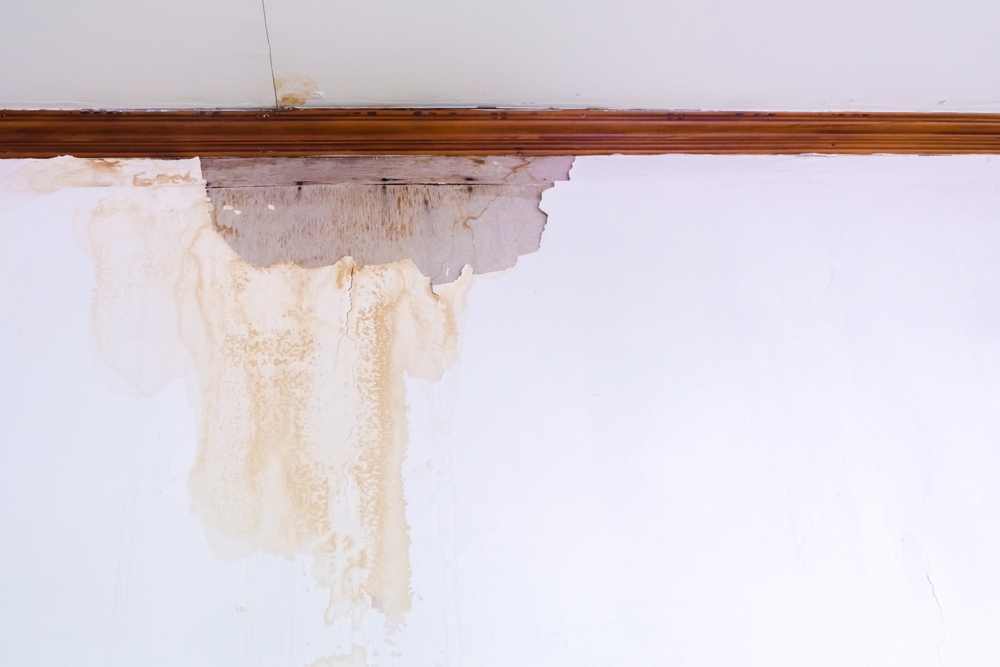
| Upper-floor ceiling | Brown staining after rain | Roofing, flashing, attic moisture |
| Storage areas | Mold on cardboard or fabric | Elevated humidity and poor air circulation |
The stain itself rarely tells the whole story.
We want to know why that material became wet and whether the moisture is still active.
That determines what needs to happen next.
Fall Rain Can Reveal Basement and Foundation Problems
Toronto basements often provide some of the clearest fall inspection clues.
A finished basement can hide foundation walls behind insulation, wood framing and drywall. Water may enter without producing visible standing water.
The homeowner may notice a musty smell first.
Other signs can include swollen baseboards, damp carpet edges, peeling paint, white mineral deposits on masonry or a dehumidifier that seems to run constantly.
Rainfall patterns can help narrow down the source.
A basement that becomes noticeably more damp after rain requires a different investigation from a basement that remains humid during dry weather.
Exterior drainage should also be considered.
Water flowing from a short or disconnected downspout can collect near the foundation. Blocked gutters can allow water to overflow close to exterior walls. Poor grading can direct surface water back toward the house.
Inside the basement, the inspection should determine whether moisture has reached drywall, insulation, flooring or framing.
This is especially important in a finished basement, where the visible wall surface can remain dry while the cavity behind it stays damp.
Fall Is Also a Good Time to Look at the Attic
Attic mold often remains unnoticed because homeowners rarely enter the space.
Fall creates a useful inspection window.
Roof leaks may become apparent during seasonal rain, while colder roof sheathing can expose condensation and indoor air leakage problems before the coldest part of winter arrives.
Common areas to examine include roof sheathing, rafters, insulation around the attic hatch, bathroom exhaust ducts and roof penetrations.
Dark staining on plywood does not automatically tell us whether the problem is active.
Moisture readings, the location of the staining and the condition of surrounding materials provide more useful information.
An inspector may also look for insulation that has been moved or compressed, blocked soffit areas and bathroom exhaust ducts that terminate improperly.
If attic mold is already present, correcting the moisture source is part of preventing it from returning after remediation.
A Musty Smell When the Furnace Starts Deserves Attention
Some homeowners first notice an odour after their heating system starts running again.
The smell may appear near vents or spread through several rooms.
That does not prove mold is growing throughout the duct system.
Health Canada recommends examining accessible filters and humidifiers when odours appear as fan-driven heating or cooling systems start operating. If the problem remains after those components are checked, further assessment may be appropriate.
During an inspection, we also look beyond the duct itself.
Moisture can exist around an HVAC cabinet, inside nearby insulation, around a humidifier, below a condensate system or within surrounding building materials.
Finding the moisture source matters more than assuming the smell originates inside the ductwork.
Cold Rooms Need Another Look After Summer
Toronto houses with under-porch cold rooms or cold cellars deserve special attention during seasonal transitions.
These rooms stay colder than the finished basement.
During summer, humid air can condense against the concrete ceiling and walls. By fall, cardboard boxes, wood shelving, fabrics or stored materials may already have absorbed moisture.
Then the outdoor temperature begins dropping.
A homeowner may notice an earthy smell, surface mold behind storage items or recurring dampness.
Fall provides a good opportunity to empty the room and determine whether the moisture came from condensation, exterior water entry or both.
Our guide to cold room mold in Toronto explains these moisture patterns in more detail.
Should You Get a Mold Inspection Before Winter?
You do not need an annual mold inspection simply because the calendar says September or October.
The condition of the building should drive the decision.
A fall inspection makes more sense when a home has experienced heavy summer humidity, water damage, basement seepage, roof leakage or recurring condensation.
It can also be useful before winter when you already suspect a problem inside an attic or finished wall.
Once winter arrives, some exterior repairs become harder to complete and homes remain closed for longer periods.
Finding the moisture source during fall can provide more time to correct drainage, ventilation, roof or building-envelope problems before colder weather becomes established.
Mold Inspection or Mold Testing?
A mold inspection and mold testing answer different questions.
A mold inspection focuses on the building.
The goal is to locate visible mold, moisture, water damage and conditions that allow fungal growth.
An inspector may use moisture meters, temperature and humidity readings and thermal imaging to help identify areas that require closer examination.
Thermal imaging shows temperature patterns. It does not identify mold through a wall.
Mold testing collects air, surface or material samples for laboratory analysis.
Testing may be useful when a specific question needs an answer, such as suspected hidden contamination, documentation requirements, comparison between affected and unaffected areas or post-remediation verification.
Visible mold does not always require laboratory testing before corrective work begins.
The inspection should determine whether testing will provide information that changes the next decision.
What Happens During a Fall Mold Inspection?
At Ultimate Mold Crew, the inspection begins with the history of the problem.
We want to know when you first noticed the smell, stain or moisture.
We also look at whether it changes after rain, during humid weather or once the heating system starts operating.
The assessment can include visual inspection of accessible areas, moisture measurements, indoor humidity readings, thermal imaging and examination of areas connected to the suspected moisture source.
Attics, basements, crawl spaces, bathrooms, cold rooms, utility areas and finished wall surfaces may receive extra attention depending on the symptoms.
Where testing is justified, air or surface sampling can be discussed separately.
What Toronto Homeowners Can Check This Fall
Before calling an inspector, you can perform a simple walk-through without disturbing suspected mold.
- Check window sills after cool nights for recurring water.
- Smell the basement after it has been closed for several hours.
- Look along basement carpet edges and baseboards.
- Inspect around the sump pit and laundry area.
- Check beneath sinks and around plumbing connections.
- Look for new ceiling stains after heavy rain.
- Inspect accessible areas around the attic hatch.
- Check bathroom ceilings and exhaust grilles.
- Move storage boxes slightly away from basement and cold-room walls.
- Record indoor humidity with a digital hygrometer.
- Check gutters and downspouts for obvious blockage or overflow.
- Photograph stains so you can see whether they change over time.
Health Canada recommends keeping indoor relative humidity between 30% and 50% where practical.
A dehumidifier can help manage airborne moisture in a damp basement. It cannot correct a roof leak, foundation seepage, wet insulation or contaminated drywall.
When You Should Book an Inspection Instead of Waiting
Book a mold inspection when a musty smell persists without an obvious source.
The same applies when visible mold keeps returning after cleaning, water stains are expanding, basement materials remain damp or a previous leak was never properly dried.
A large amount of mold also requires more care.
Health Canada classifies mold covering more than 3 m², roughly 32 square feet, as extensive growth and recommends considering professional assistance.
Hidden mold can also justify an assessment.
Health Canada notes that mold can grow behind walls and above ceilings. Persistent musty odours without visible growth may justify professional investigation.
Waiting for visible mold to appear can allow affected materials to remain damp for much longer than necessary.
Is September or October a Good Time for a Mold Inspection in Toronto?
Yes.
Early and mid-fall can provide useful clues because humid summer conditions have recently ended while cooler nights, rainfall and heating-season changes begin affecting the house.
The calendar alone should not determine when you inspect.
Visible mold, water damage or persistent moisture should be investigated when discovered.
Can Mold Start Growing in Fall?
Mold can grow whenever suitable materials remain damp long enough.
Fall may create favourable conditions through condensation, roof leakage, foundation seepage or indoor humidity.
The important variable is moisture rather than the season itself.
Why Are My Windows Wet Every Morning in Fall?
Warm indoor air contains moisture.
As outdoor temperatures fall, window glass can become one of the coldest surfaces in the house. Moisture can then condense on the glass.
Repeated condensation can wet window frames, trim, drywall and surrounding materials.
Check indoor humidity, ventilation and the condition of the window assembly if this happens regularly.
Can a Musty Smell Appear Only When the Furnace Is Running?
Yes.
Air movement can make an existing odour more noticeable.
Inspect accessible filters, humidifier components and nearby building materials. Persistent odours may require a wider moisture inspection to determine where they originate.
Does Fall Mold Mean I Have a Roof Leak?
Sometimes.
Attic or ceiling mold may relate to a roof leak, while other cases involve indoor air leakage, bathroom exhaust problems or condensation.
The moisture pattern and location need to be examined before the cause is determined.
Should I Test the Air for Mold Every Fall?
Routine seasonal air testing is usually unnecessary.
Mold Testing is more useful when it answers a defined question.
A visual inspection, moisture assessment and investigation of the building often provide the first information needed to decide whether sampling would add value.
Peer-reviewed research and technical studies for Spring Mold Growth
| # | Citation | Key Focus |
|---|---|---|
| 1 | Saghir, S. A., et al. (2024). Molds and mycotoxins indoors I: Current issues and way forward. | Comprehensive review in Archives of Clinical Toxicology linking rising seasonal temperatures and humidity to increased mold growth, sporulation, and the prevalence of fungal diseases. |
| 2 | Sedoni, R., et al. (2025). A hybrid model for the assessment of indoor environmental quality: An insight into mold growth. | Peer-reviewed study in Energy Reports analyzing how the transition from winter to spring creates specific temperature and humidity thresholds that trigger rapid mold colonization in residential buildings. |
| 3 | Mengyao, C., et al. (2025). Seasonal variation and influencing factors of airborne microbial concentrations. | Research in Scientific Reports documenting the seasonal fluctuations of indoor bioaerosols and how spring environmental conditions facilitate the dispersal of mold spores. |
| 4 | Hardeman, A., et al. (2025). Mold remediation in homes after flooding: A clinical and environmental review. | Study in The Journal of Allergy and Clinical Immunology emphasizing the importance of early remediation following seasonal water intrusion (like spring snow melt) to prevent chronic health issues. |
| 5 | Ultimate Mold Crew (2026). Mold After Snow Melt During Spring: Causes & Prevention. | Technical report detailing the “spring thaw” phenomenon where melting snow and rising groundwater levels lead to foundation seepage and hidden mold growth in basements and crawlspaces. |
| 6 | HomeQuest Inspection (2025). Why Spring Is the Best Time For A Home Maintenance Inspection. | Professional guide outlining the benefits of spring inspections for identifying post-winter structural damage, roof leaks, and gutter failures before they lead to extensive mold problems. |
| 7 | ServiceMaster (2025). Why Does Mold Grow Faster in Warmer Temperatures? | Technical analysis of the transition from cold, dry winters to moist, warming springs and how this “perfect storm” of conditions catches homeowners off guard with rapid mold expansion. |
| 8 | Nečasová, B., et al. (2020). Research Summary on Characterizing Impact of Environment on Building Durability. | Research in Materials summarizing how seasonal environmental stress, particularly during the spring thaw, impacts the integrity of building sealants and leads to moisture-related mold issues. |
