
Updated on 27-Jul-2026
Table of Contents
What is the Cost Of Water Damage Repair in Toronto?
Water damage repair in Toronto usually costs C$500 to C$15,000+, depending on the water source, affected materials, drying time, contamination level, and rebuild needs. Minor leaks may only require inspection, drying, drywall repair, and paint. Larger losses may require water extraction, structural drying, demolition, mold remediation, flooring replacement, sewage cleanup, or full basement restoration.
In this guide:
What Toronto homeowners actually pay depending on the water source, affected material, contamination category, drying time, mold risk, and whether repair means cleanup only or full rebuild.
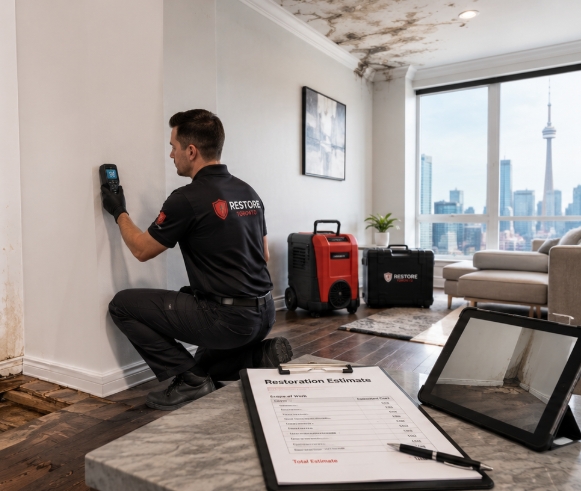
A small ceiling stain from a minor leak may cost a few hundred dollars to inspect and repair.
A flooded finished basement can cost several thousand dollars.
A sewage backup, long-term leak or water-damaged wall cavity with mold can cost significantly more because the job may involve contaminated material removal, drying, demolition, disposal, mold remediation and reconstruction.
The biggest mistake homeowners make is asking for one flat “water damage cost” before the damage has been assessed.
Water damage repair is priced in stages:
- Emergency response and water extraction
- Drying and dehumidification
- Material removal
- Cleaning and sanitizing
- Mold prevention or mold remediation
- Reconstruction and finishing
Some projects only need the first two stages.
Others need all six.
Water Damage Repair Cost in Toronto: Quick Snapshot

Here are practical planning ranges for common water damage repair services in Toronto.
| Water Damage Service | Typical Toronto Cost | What It Usually Includes |
|---|---|---|
| Inspection or moisture assessment | C$200 to C$500 | Visual inspection, moisture readings, source review |
| Water extraction | C$500 to C$2,000 | Removing standing water from floors, carpets or basements |
| Structural drying and dehumidification | C$1,000 to C$3,500 | Air movers, dehumidifiers, moisture monitoring |
| Small drywall water damage repair | C$500 to C$1,500 | Limited cutting, patching, drying and repainting |
| Larger drywall removal and replacement | C$1,500 to C$5,000+ | Removing wet drywall, insulation, trim and rebuilding |
| Basement flood cleanup | C$2,500 to C$10,000+ | Extraction, drying, demolition, disposal, cleaning |
| Sewage backup cleanup | C$4,000 to C$15,000+ | Contaminated water cleanup, removal, disinfection, disposal |
| Mold remediation after water damage | C$1,500 to C$6,000+ | Containment, removal, HEPA cleaning and remediation |
| Full water damage restoration | C$8,000 to C$25,000+ | Cleanup, drying, demolition, rebuild and finishing |
These numbers are planning ranges, not guaranteed quotes.
The average cost of restoring water damage due to water leakage, floods or moisture buildup could be between $3.00 to $10.00 per square foot and may be around $2,800. For an average home the estimated cost to repair water damage depends on many factors.
The final cost of water damage repair depends on the water source, square footage, building materials, drying time, contamination level, accessibility, insurance requirements and whether reconstruction is included.
Why Water Damage Repair Costs Vary So Much
Two homes can have the same amount of visible water but very different repair costs.
For example, water sitting on ceramic tile for one hour is not the same as water soaking into finished basement drywall overnight.
The cost changes based on:
- How long the water was present
- Whether the water reached walls, floors or insulation
- Whether the water source was clean or contaminated
- Whether demolition is needed
- Whether mold has started to grow
- Whether the basement, ceiling, bathroom, kitchen or attic is affected
- Whether drying equipment is needed for several days
- Whether electrical, plumbing or HVAC components are involved
- Whether insurance documentation is required
- Whether reconstruction is part of the quote
A proper water damage estimate should separate mitigation from repair.
Mitigation means stopping the damage from getting worse.
Repair means rebuilding what was damaged.
Those are not always the same price.
Water Damage Mitigation Vs Water Damage Repair

This is where many homeowners get confused.
A restoration company may first quote for emergency cleanup and drying. That does not always include full cosmetic repair.
Water damage mitigation may include:
- Water extraction
- Removing wet materials
- Setting up drying equipment
- Moisture readings
- Containment where needed
- Cleaning affected surfaces
- Preventing mold growth
- Disposal of damaged materials
Water damage repair may include:
- Drywall replacement
- Insulation replacement
- Flooring replacement
- Baseboard and trim installation
- Painting
- Cabinet repair
- Ceiling repair
- Subfloor repair
- Full basement restoration
- Reconstruction after demolition
A C$2,500 emergency drying job may still lead to a separate rebuild quote.
That does not mean the contractor is overcharging. It means cleanup and reconstruction are different scopes of work.
Before approving work, ask whether the estimate includes:
- Extraction only
- Drying only
- Demolition
- Mold remediation
- Reconstruction
- Painting and finishing
- Contents cleaning
- Insurance documentation
Cost by Type of Water Damage
Clean Water Damage Cost
Clean water damage usually comes from:
- Supply line leaks
- Overflowing sinks or tubs
- Broken appliance water lines
- Some pipe bursts
- Rainwater that has not become contaminated
Clean water damage often costs less when it is handled quickly.
Typical cost range: C$500 to C$5,000+
The cost increases if water sits long enough to soak into drywall, insulation, flooring or subflooring.
Even clean water can become a mold risk if materials remain wet.
Grey Water Damage Cost
Grey water may come from:
- Washing machines
- Dishwashers
- Some appliance overflows
- Used sink or shower water
- Water with minor contaminants
Grey water cleanup usually costs more than clean water because affected materials may need more careful removal and cleaning.
Typical cost range: C$2,000 to C$8,000+
The longer grey water remains in the home, the more likely the project will require removal of porous materials.
Sewage or Black Water Damage Cost
Sewage backup and black water damage are among the most expensive water damage situations.
This may involve:
- Sewer backup
- Toilet overflow with waste
- Floodwater entering the basement
- Contaminated water from outside
- Drain backup
Typical cost range: C$4,000 to C$15,000+
Severe cases can exceed that range when finished basements, flooring, drywall, contents and mechanical rooms are affected.
Sewage cleanup costs more because the job may require contaminated material removal, disinfection, protective equipment, disposal and more cautious handling.
Cost by Affected Area
Basement Water Damage Repair Cost
Basement water damage in Toronto commonly costs C$2,500 to C$10,000+.
The cost depends on whether the basement is unfinished, partially finished or fully finished.
An unfinished concrete basement may require extraction, drying and cleaning.
A finished basement may require:
- Carpet removal
- Laminate or vinyl flooring removal
- Drywall cutting
- Insulation removal
- Baseboard removal
- Contents disposal
- Mold inspection
- Dehumidification
- Reconstruction
Basements are also more likely to need moisture monitoring because concrete, framing, insulation and flooring systems can hold water longer than homeowners expect.
Ceiling Water Damage Repair Cost
Ceiling water damage usually costs C$500 to C$4,000+, depending on the source and extent.
Common causes include:
- Roof leaks
- Bathroom leaks from above
- Plumbing leaks
- Overflowing tubs or toilets
- HVAC condensation leaks
A small stain may only need investigation and cosmetic repair.
A larger ceiling leak may require opening the ceiling, drying the cavity, removing wet insulation, checking for mold and replacing drywall.
Do not repaint a water-stained ceiling until the leak source has been confirmed and the cavity is dry.
Wall and Drywall Water Damage Repair Cost
Drywall water damage repair can cost C$500 to C$5,000+ depending on how much material needs to be opened and replaced.
Costs increase when water has affected:
- Insulation
- Baseboards
- Framing
- Electrical areas
- Flooring edges
- Adjacent rooms
- Hidden wall cavities
Drywall is porous. If it stays wet, it can lose strength and become a mold risk.
Small cosmetic patches are cheaper. Wall cavity drying, demolition and rebuild cost more.
Flooring Water Damage Repair Cost
Flooring water damage can range from C$500 to C$8,000+ depending on the material.
Costs vary because flooring materials respond differently to water.
| Flooring Type | Water Damage Risk |
|---|---|
| Ceramic tile | May survive if water did not reach below |
| Vinyl plank | May trap moisture underneath |
| Laminate | Often swells and needs replacement |
| Hardwood | Can cup, warp or require refinishing |
| Carpet | May need removal if heavily soaked or contaminated |
| Subfloor | Can require drying, repair or replacement |
The visible floor is only part of the problem.
Moisture trapped underneath can lead to odour, swelling and mold.
Bathroom Water Damage Repair Cost
Bathroom water damage often costs C$1,000 to C$7,500+.
Common causes include:
- Toilet leaks
- Tub overflows
- Shower leaks
- Failed caulking
- Vanity leaks
- Broken supply lines
- Leaking drains
Bathroom projects can become expensive because water may travel under tile, behind vanities, into subfloors or down into the ceiling below.
If the water source is contaminated, the cost increases.
Kitchen Water Damage Repair Cost
Kitchen water damage can cost C$1,500 to C$10,000+ depending on cabinets, flooring and appliance involvement.
Common causes include:
- Dishwasher leaks
- Sink supply leaks
- Drain leaks
- Refrigerator water-line leaks
- Ice-maker leaks
- Slow cabinet leaks
Cabinet water damage can be costly because particleboard and MDF may swell and break down after soaking.
If water runs under cabinets or flooring, drying may require removal.
Water Extraction and Drying Cost
Water extraction and drying are often the first paid stage after a leak or flood.
Typical cost range: C$500 to C$3,500+
This may include:
- Removing standing water
- Pulling wet carpet or underpad
- Setting up air movers
- Setting up dehumidifiers
- Monitoring moisture levels
- Returning to check drying progress
- Removing damaged material if needed
Drying equipment may need to run for several days.
The cost depends on the amount of water, the number of machines, room size and how long the materials take to dry.
Drywall, Insulation and Material Removal Cost
Material removal may be needed when water has soaked into porous materials.
This can include:
- Drywall
- Insulation
- Carpet
- Underpad
- Baseboards
- Cabinetry
- Ceiling materials
- Laminate flooring
- Particleboard
- Contents stored in wet areas
Material removal can cost C$1,000 to C$6,000+ depending on the area affected.
Removal may feel extreme, but it is often necessary when materials cannot be dried safely or when mold has started to grow.
Mold Risk After Water Damage
Mold is one of the biggest reasons water damage repair becomes more expensive.
If wet materials are dried quickly, the job may stay limited.
If water sits behind walls, under floors or inside insulation, mold risk increases.
EPA guidance recommends drying wet materials and furnishings within 24 to 48 hours where possible to help prevent mold growth. Health Canada also emphasizes fixing moisture problems and removing mold-contaminated materials that cannot be cleaned.
Mold remediation cost after water damage may cost C$1,500 to C$6,000+, depending on the affected area, material type and containment needs.
Mold risk is higher when:
- The leak was hidden
- Water sat for more than a day or two
- Drywall stayed wet
- Insulation was soaked
- The basement remained humid
- Flooring trapped water underneath
- There is a musty smell
- Staining keeps spreading
- The same area has leaked before
Do not wait for visible mold before taking water damage seriously.
A musty smell after a leak is enough reason to inspect.
What Changes the Final Water Damage Repair Quote?
A water damage quote is not based only on how the room looks.
A small amount of visible water can hide a much larger drying problem inside walls, flooring, insulation or cabinets.
The final quote usually depends on the following factors.
1. How Long the Water Was Sitting
Time is one of the biggest cost drivers.
Water damage caught within the first few hours is usually less expensive than damage discovered days later.
Costs increase when water has had time to:
- Soak into drywall
- Spread under flooring
- Reach insulation
- Wick up baseboards
- Enter wall cavities
- Affect cabinets
- Create musty odours
- Increase mold risk
A fresh supply-line leak may be dried and repaired quickly.
A slow leak behind a vanity or finished basement wall may require demolition because the materials stayed damp for too long.
2. The Source of the Water
Clean water is usually less expensive to handle than contaminated water.
A broken supply line is different from a sewage backup.
A rain leak is different from a toilet overflow.
The more contaminated the water, the more careful the cleanup must be.
This affects:
- Protective equipment
- Material removal
- Disposal requirements
- Cleaning procedures
- Disinfection
- Drying time
- Whether belongings can be saved
Sewage and drain backups usually cost more because porous materials often cannot be safely dried and reused.
3. The Size of the Affected Area
Water spreads.
A leak that starts in one room may travel:
- Under flooring
- Behind baseboards
- Through ceiling cavities
- Into insulation
- Down wall cavities
- Into the basement
- Across subflooring
- Under cabinets
A quote should not be based only on the visible stain or puddle.
Moisture readings help determine how far the damage has actually spread.
4. Material Type
Different materials react differently to water.
Concrete may dry with equipment.
Drywall may need partial removal.
Insulation may need replacement.
Laminate flooring may swell.
Cabinets made from MDF or particleboard may break down after soaking.
Costs increase when water affects materials that are hard to dry, hard to access or expensive to replace.
5. Whether Mold Is Present
If mold has started to grow, the project changes.
The job may now require:
- Containment
- Controlled demolition
- HEPA filtration
- Mold-contaminated material removal
- Surface cleaning
- Post-remediation verification
- More careful disposal
- Additional documentation
This is where UMC has an advantage over general restoration companies.
Water damage repair is not only about drying the room. It is also about knowing when wet materials have become a mold risk.
6. Access Difficulty
Some areas are harder and more expensive to work in.
Costs may increase when damage affects:
- Crawl spaces
- Finished basements
- Attics
- Ceiling cavities
- Behind cabinets
- Under built-in furniture
- Condo mechanical areas
- Tight utility rooms
- Multi-unit buildings
- Commercial spaces
The harder it is to access the wet materials, the more labour the project usually requires.
7. Emergency Timing
Emergency response usually costs more than scheduled work.
After-hours, weekend or holiday calls may involve higher rates because crews need to respond quickly, stop active damage and set up equipment immediately.
This is often worth it when water is actively spreading.
Waiting until the next day may save on callout cost, but it can increase demolition, drying and mold-related costs.
Emergency Water Damage Repair Cost
Emergency water damage repair in Toronto often costs more than non-urgent repair because the first goal is to stop the damage from getting worse.
Emergency work may include:
- Immediate water extraction
- Leak-source coordination
- Moving contents
- Removing wet materials
- Setting up drying equipment
- Moisture mapping
- Temporary containment
- Emergency disposal
- After-hours crew time
Typical emergency response and mitigation can range from C$1,000 to C$5,000+, depending on the size and severity of the loss.
Major basement flooding, sewage backup or multi-room water damage can exceed that range.
Emergency service is most important when:
- Water is still spreading
- Flooring is soaked
- Drywall is wet
- A ceiling is sagging
- Sewage is involved
- Electrical areas may be affected
- A finished basement is flooding
- The property is occupied by tenants
- The damage is affecting a business operation
The goal of emergency mitigation is not always to complete the full repair immediately.
The first goal is to stabilize the property.
Hidden Water Damage Costs Homeowners Miss
Many homeowners expect the cost to stop at water removal.
That is rarely the full picture.
Hidden costs may include:
- Drywall cutting and replacement
- Insulation removal
- Baseboard removal
- Flooring removal
- Cabinet replacement
- Subfloor drying
- Painting
- Trim work
- Contents disposal
- Mold remediation
- Air quality or mold testing
- Plumbing repair
- Roof repair
- Electrical inspection
- HVAC inspection
- Permit or condo paperwork
- Hotel or temporary relocation costs
- Insurance deductible
The most important thing is to separate the quote into categories.
Ask what is included and what is not.
A low quote for extraction may not include drywall repair, mold remediation or reconstruction.
Insurance and Water Damage Repair Cost
Many water damage projects involve insurance, but coverage depends on the cause of the loss and the details of the policy.
Insurance may respond differently to:
- Sudden pipe bursts
- Appliance leaks
- Sewer backups
- Roof leaks
- Flooding from outside
- Long-term seepage
- Foundation leaks
- Neglected maintenance
- Gradual leaks behind walls
A sudden accidental leak may be treated differently than long-term moisture that developed over months.
Before assuming coverage, ask your insurer:
- Is this type of water damage covered?
- Is sewer backup coverage included?
- Is overland flood coverage included?
- What is the deductible?
- Is mold remediation covered if caused by this loss?
- Is emergency mitigation covered?
- Are temporary accommodations covered?
- Do they require photos or moisture readings?
- Can you choose your own contractor?
- Do they need an estimate before work begins?
Do not delay urgent mitigation while waiting for paperwork if water is actively damaging the property.
Most insurers expect homeowners to take reasonable steps to prevent further damage.
Water Damage Repair Cost Examples in Toronto
Scenario 1: Small Ceiling Leak Below an Upstairs Bathroom
A small stain appears on the ceiling below a bathroom.
The plumber fixes the leak quickly. Moisture readings show limited damage.
Likely scope:
- Moisture inspection
- Small ceiling opening if needed
- Drying
- Drywall patch
- Paint touch-up
Estimated cost: C$500 to C$2,000
Cost increases if the ceiling cavity is wet, insulation is affected or mold is discovered.
Scenario 2: Dishwasher Leak Under Kitchen Flooring
A dishwasher line leaks slowly under flooring and cabinets.
The homeowner notices swelling and a musty smell.
Likely scope:
- Moisture inspection
- Appliance removal
- Flooring removal
- Cabinet assessment
- Drying equipment
- Possible mold inspection
- Flooring replacement
Estimated cost: C$2,000 to C$8,000+
Cost increases when cabinets or subflooring need replacement.
Scenario 3: Finished Basement Flood After Heavy Rain
Water enters a finished basement after heavy rain.
Carpet, underpad, baseboards and lower drywall are wet.
Likely scope:
- Water extraction
- Carpet and underpad removal
- Drywall flood cuts
- Insulation removal
- Structural drying
- Dehumidification
- Mold prevention or remediation
- Reconstruction
Estimated cost: C$3,500 to C$15,000+
Cost increases if the water source is not corrected or if mold is already present.
Scenario 4: Sewer Backup in Basement
A sewer backup affects a basement washroom and surrounding finished area.
Likely scope:
- Contaminated water extraction
- Removal of affected porous materials
- Disinfection
- Disposal
- Drying
- Odour control
- Possible contents disposal
- Reconstruction
Estimated cost: C$4,000 to C$20,000+
Sewage cleanup is more expensive because it involves contamination risk, not just water.
Scenario 5: Roof Leak Into Attic and Ceiling
A roof leak wets attic insulation and creates ceiling staining below.
Likely scope:
- Roof leak repair by roofer
- Attic inspection
- Wet insulation removal
- Drying
- Mold inspection
- Ceiling repair
- Insulation replacement
Estimated cost: C$1,500 to C$8,000+
Cost increases when roof sheathing, attic mold or multiple ceiling areas are affected.
Scenario 6: Long-Term Plumbing Leak Behind a Wall
A slow leak behind a wall goes unnoticed for weeks or months.
Drywall, insulation, framing and flooring edges are affected.
Likely scope:
- Moisture investigation
- Controlled demolition
- Mold remediation
- Drying
- Plumbing repair coordination
- Reconstruction
Estimated cost: C$3,000 to C$12,000+
Long-term leaks are often more expensive than sudden leaks because they create hidden mold and material damage.
DIY Water Damage Repair: When It Is Safe and When It Is Risky
Small spills and very minor clean-water incidents may sometimes be handled by homeowners.
DIY may be reasonable when:
- The water source is clean
- The area is small
- The water was cleaned immediately
- No drywall, insulation or flooring is wet
- There is no musty smell
- No ceiling or wall cavity is affected
- The area dries quickly
- No sewage is involved
DIY becomes risky when:
- Water reached drywall
- Water entered a wall cavity
- Flooring is swelling
- Carpet or underpad is soaked
- Insulation is wet
- The ceiling is sagging
- There is a musty smell
- Sewage or drain backup is involved
- The leak was hidden
- The same area has leaked before
- Occupants have asthma, allergies or immune concerns
Household fans are not a complete drying plan.
They may dry the surface while moisture remains trapped behind walls, under flooring or inside insulation.
Questions to Ask Before Hiring a Water Damage Contractor
Before approving work, ask:
- What is included in the estimate?
- Is this mitigation only or full repair?
- Does the quote include reconstruction?
- How much water-damaged material needs removal?
- Are moisture readings included?
- Will drying equipment be monitored?
- How many days will equipment run?
- Is mold inspection included?
- Is mold remediation included if growth is found?
- Are contents included?
- Is disposal included?
- Are after-hours fees included?
- Will you provide photos for insurance?
- Will you communicate with the adjuster?
- Is the water source already fixed?
- Do I need a plumber, roofer or waterproofing contractor?
- Is the affected area safe to occupy?
- What happens if more damage is found after demolition?
A good contractor should be able to explain the difference between drying, demolition, remediation and rebuilding.
Red Flags in Water Damage Repair Quotes
Be careful if a contractor:
- Gives a firm price without inspecting the damage
- Does not use moisture meters
- Only looks at visible stains
- Says everything can be dried without checking wall cavities
- Ignores musty odours
- Does not ask how long the water was present
- Does not distinguish clean water from sewage
- Paints over water stains without addressing moisture
- Replaces drywall before confirming drying
- Does not explain whether mold is part of the scope
- Pressures you to sign immediately without explaining the work
- Refuses to provide photos or documentation
A cheap quote can become expensive if wet materials are closed up too soon.
How to Reduce Water Damage Repair Costs
You cannot always control the cause of water damage, but you can reduce the final cost by acting quickly.
Practical steps include:
- Stop the water source if safe
- Call a plumber, roofer or restoration company quickly
- Move dry belongings away from the affected area
- Do not enter areas with sewage contamination
- Do not use electrical devices near standing water
- Take photos before cleanup
- Remove small amounts of standing clean water if safe
- Improve ventilation only if it will not spread contamination
- Start professional drying quickly
- Keep records for insurance
- Do not rebuild until materials are dry
The faster wet materials are assessed, the more options you usually have.
Waiting often reduces salvageability.
How Ultimate Mold Crew Approaches Water Damage Repair Cost
Ultimate Mold Crew looks at water damage with a mold-prevention mindset.
That matters because the visible water is not always the full problem.
During assessment, UMC may review:
- Source of water
- Moisture spread
- Affected materials
- Drywall and insulation condition
- Flooring and subfloor risk
- Basement humidity
- Attic or ceiling cavity moisture
- Odour
- Visible mold growth
- Risk of hidden mold
- Whether containment is needed
- Whether reconstruction should wait
For clean, recent water damage, the goal is to dry the area before mold becomes a problem.
For delayed leaks, finished basement flooding, sewage backups or musty wall cavities, the project may require both water damage restoration and mold remediation.
More About Us
Ultimate Mold Crew provides water damage restoration, mold inspection and mold remediation services throughout Toronto and the Greater Toronto Area.
Call 647-985-2739 if your property has water damage, a musty smell after a leak, wet drywall, basement flooding or possible mold growth.
Frequently Asked Questions
How much does water damage repair cost in Toronto?
Most water damage repair projects in Toronto cost between C$500 and C$15,000+. Small leaks may cost less, while flooded basements, sewage backups, mold growth and full reconstruction can cost significantly more.
How much does water extraction cost?
Water extraction often costs C$500 to C$2,000, depending on how much standing water is present, the affected area, access and whether carpet or flooring removal is needed.
How much does structural drying cost?
Structural drying and dehumidification commonly cost C$1,000 to C$3,500+. The price depends on the number of air movers, dehumidifiers, drying days and moisture-monitoring visits.
How much does basement flood cleanup cost in Toronto?
Basement flood cleanup often costs C$2,500 to C$10,000+. Finished basements, contaminated water, wet drywall, flooring removal and mold remediation can raise the price.
How much does sewage backup cleanup cost?
Sewage backup cleanup often costs C$4,000 to C$15,000+. Severe cases with finished basements, contents, drywall and flooring damage can exceed that range.
Does water damage always cause mold?
No. Mold risk depends on how long materials stayed wet, humidity, temperature, airflow and material type. The risk increases when drywall, insulation, wood or flooring remain damp.
How soon can mold grow after water damage?
Mold can begin growing within 24 to 48 hours when moisture and suitable materials are present. That is why quick drying and moisture control are important after leaks and floods.
Is water damage covered by insurance?
Sometimes. Coverage depends on the cause of the water damage and your policy. Sudden accidental damage may be treated differently than long-term seepage, maintenance issues or flooding without specific coverage.
Should I call insurance before a restoration company?
If water is actively damaging the property, emergency mitigation should not be delayed. Take photos, call your insurer and begin reasonable steps to prevent further damage.
Is drywall always removed after water damage?
No. Drywall may be dried if the damage is minor and clean water is involved. Removal is more likely when drywall is saturated, contaminated, damaged, moldy or wet inside a wall cavity.
Can I dry water damage myself?
Small clean-water spills may be manageable. Professional help is recommended when water reaches drywall, insulation, flooring, ceilings, cabinets, basements or any hidden cavity.
Why does water damage repair cost more than expected?
Costs rise when damage spreads behind surfaces. Flooring, insulation, baseboards, drywall, subflooring, cabinets, mold remediation and reconstruction may all add to the final price.
Is mold remediation included in water damage repair?
Not always. Some quotes include only extraction and drying. If mold is present, mold remediation may be a separate line item or separate scope.
Can I rebuild immediately after water damage?
Only after the affected materials are dry and the source of water has been fixed. Rebuilding too soon can trap moisture and create mold.
Who should I call for water damage repair in Toronto?
Call a water damage restoration company when active water, wet materials or drying equipment is involved. Call a mold remediation company in Toronto when there is visible mold, musty odour, delayed drying or hidden contamination risk.
Final Word
Water damage repair cost in Toronto depends on more than the size of the puddle.
The real cost comes from what the water touched, how long materials stayed wet, whether contamination is involved, and whether the project requires drying, demolition, mold remediation or full reconstruction.
A small leak caught early may be affordable to repair.
A delayed leak behind finished walls can become expensive because wet drywall, insulation, flooring and mold all need to be addressed properly.
The safest approach is to assess the damage early, dry materials correctly and avoid closing walls or floors before moisture is under control.
References
- https://www.epa.gov/mold/mold-cleanup-your-home
- https://www.epa.gov/mold/brief-guide-mold-moisture-and-your-home
- https://www.canada.ca/en/health-canada/services/publications/healthy-living/addressing-moisture-mould-your-home.html
- https://www.canada.ca/en/health-canada/services/air-quality/indoor-air-contaminants/reduce-humidity-moisture-mould.html
- https://www.ccohs.ca/oshanswers/chemicals/iaq/iaq_mould.html
- https://www.canada.ca/en/health-canada/services/publications/healthy-living/flood-cleanup-keep-your-family-safe.html
- https://www.toronto.ca/services-payments/water-environment/basement-flooding/
- https://www.toronto.ca/services-payments/water-environment/managing-rain-melted-snow/basement-flooding-protection-subsidy-program/
