

Updated on 13-Mar-2026
Table of Contents
Why Mold on Bathroom Ceilings Should Never Be Ignored
Mold on a bathroom ceiling is one of the most common indoor mold problems homeowners encounter. Because bathrooms regularly produce steam and moisture, ceilings can easily become damp enough for mold to grow.
At first, the problem often appears as small dark spots above the shower or near ceiling corners. In many cases, homeowners may also notice a musty smell developing in the bathroom.
While a small patch of mold might seem minor, it usually signals that excess moisture has been present for some time.
“Bathroom ceilings are one of the most frequent places we find mold during home inspections,” explains Jhonny Antonio C, Owner of Ultimate Mold Crew Toronto.
“Warm steam from showers rises and condenses on cooler ceiling surfaces, and if ventilation is poor, that moisture can stay trapped long enough for mold to begin growing.”
Bathrooms create the perfect environment for mold growth because they combine three conditions mold needs:
- • warm air
- • high humidity
- • organic surfaces such as drywall or paint
When these conditions persist, mold spores already present in indoor air can settle on damp surfaces and begin forming colonies.
According to the U.S. Environmental Protection Agency, mold can begin growing on moist surfaces within 24 to 48 hours if humidity levels remain high.
Because bathroom ceilings are exposed to frequent moisture from showers and baths, mold growth can develop quickly if ventilation is inadequate or humidity levels remain elevated.
Understanding why mold forms on bathroom ceilings is the first step toward removing it safely and preventing it from returning.
Why Mold Grows on Bathroom Ceilings
Bathroom ceilings are particularly vulnerable to mold growth because they are constantly exposed to warm steam and high humidity. Every time someone takes a hot shower or bath, moisture rises and collects on cooler surfaces in the room.
Since warm air naturally rises, much of that moisture gathers near the ceiling.
When this humid air touches cooler drywall or painted surfaces, it condenses into tiny water droplets. Over time, repeated condensation can slowly dampen the ceiling surface, especially in areas directly above showers or near corners where airflow is limited.
“During inspections, we often find that bathroom ceiling mold develops simply because moisture has nowhere to escape,” says mold removal expert at Ultimate Mold Crew. “If a bathroom fan isn’t working properly or the room isn’t ventilated well, steam can linger long enough for mold to start forming.”
Several conditions can contribute to mold growth on bathroom ceilings.
| Cause | Why It Leads to Mold |
|---|---|
| Poor ventilation | Steam remains trapped in the room |
| High humidity | Moisture stays on surfaces longer |
| Cold ceiling surfaces | Condensation forms easily |
| Infrequent cleaning | Dust provides organic material for mold |
Drywall and ceiling paint can also absorb small amounts of moisture. When this happens repeatedly, the surface may stay damp long enough for mold spores to begin growing.
This is why bathroom mold often appears as small dark spots above the shower or along ceiling edges, where condensation tends to collect most frequently.
What Causes Mold on Bathroom Ceilings
Mold growth on bathroom ceilings almost always begins with excess moisture that remains trapped in the bathroom for extended periods. Bathrooms regularly produce steam from showers, baths, and sinks, and without proper ventilation that moisture can settle on ceilings and walls.
Several common household conditions can contribute to this problem
| Cause | How It Leads to Mold Growth |
|---|---|
| Poor or broken exhaust fans | Steam remains trapped in the bathroom instead of being vented outside |
| Long hot showers | Large amounts of steam rise and condense on ceiling surfaces |
| Cold ceiling surfaces | Condensation forms when warm moist air meets cooler drywall |
| High indoor humidity | Moisture stays in the air longer, allowing surfaces to remain damp |
| Small bathrooms with limited airflow | Moisture accumulates quickly without adequate ventilation |
Is Mold on a Bathroom Ceiling Dangerous?
In many cases, small patches of mold on a bathroom ceiling are not immediately harmful. However, mold growth should never be ignored because it can affect indoor air quality and may cause irritation for some people.
Individuals with chronic lung disease or a weakened immune system may get infections in their lungs from mold.
The Environmental Protection Agency (EPA) notes that inhaling or touching mold or mold spores may cause allergic reactions such as sneezing, runny nose, red eyes, or skin rash, all of which are common.
According to the Centers for Disease Control and Prevention (CDC), exposure to mold in damp indoor environments can contribute to symptoms such as:
- • nasal congestion
- • throat irritation
- • coughing or wheezing
- • skin irritation
- • eye irritation
People with asthma, allergies, or weakened immune systems may experience stronger reactions when exposed to mold spores.
“Even small mold growth can release spores into the air,”“Bathrooms are often small enclosed spaces, so spores can circulate more easily when ventilation is poor.”
Another concern is that visible mold may only represent part of the problem. In some cases, moisture behind ceiling drywall or inside insulation can allow mold to spread beyond what is visible on the surface.
Because of this, addressing the underlying moisture conditions is just as important as removing the mold itself.
How to Remove Mold From a Bathroom Ceiling
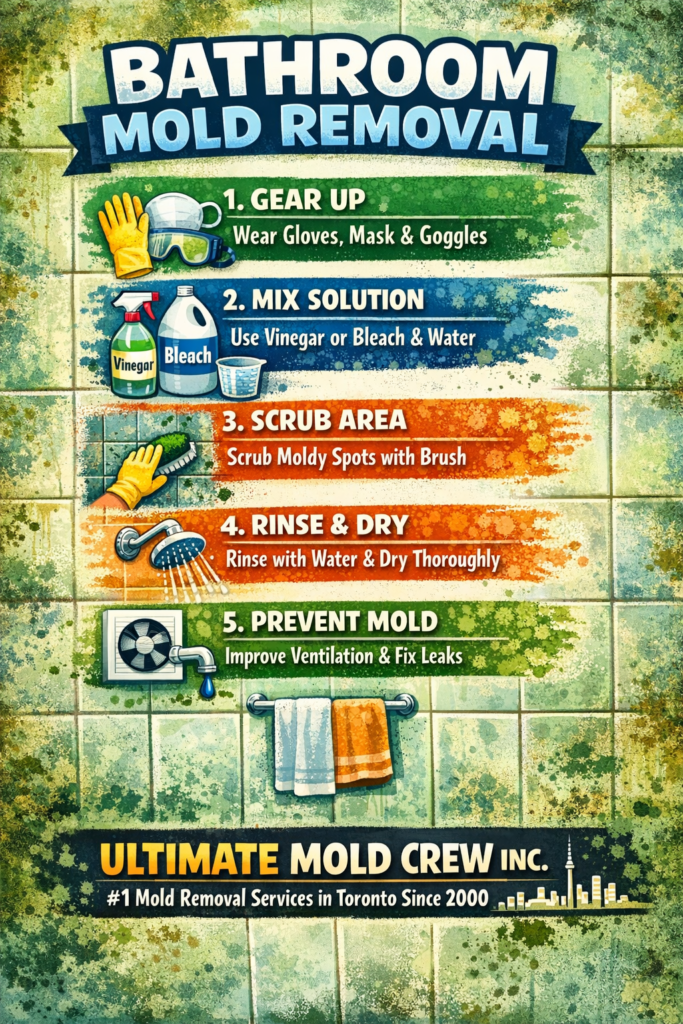
If the mold growth on a bathroom ceiling is small and limited to the surface, it can sometimes be cleaned safely using basic household cleaning methods. Before starting any cleaning, it is important to protect yourself from mold spores.
Wear protective equipment such as:
• gloves
• safety goggles
• a mask or respirator
Ventilating the bathroom before cleaning can also help reduce exposure to airborne spores.
To clean mold from a bathroom ceiling, many homeowners use a simple cleaning solution made with water and mild detergent. Some people also use hydrogen peroxide or baking soda solutions for surface cleaning.
Basic cleaning steps typically include:
-
Lightly dampen the moldy area with a cleaning solution.
-
Gently scrub the surface using a sponge or soft brush.
-
Wipe the area clean with a damp cloth.
-
Dry the surface completely to prevent further moisture buildup.
“In smaller cases, surface mold on bathroom ceilings can sometimes be removed with careful cleaning,” – Ultimate Mold Crew. “However, if mold keeps returning, it usually means the underlying humidity problem hasn’t been solved.”
If mold covers a larger area, repeatedly comes back, or appears to be spreading, it may indicate that moisture is trapped inside the ceiling materials. In those situations, professional inspection may be necessary to identify the full extent of the problem.
Mold vs Mildew on Bathroom Ceilings
Many homeowners use the terms mold and mildew interchangeably, but there are small differences between the two.
Mildew is generally considered a surface-level fungal growth that often appears as light gray or white patches on damp surfaces. It tends to remain on the surface and is often easier to clean.
Mold, on the other hand, can penetrate deeper into materials such as drywall, wood, or insulation. It often appears as darker spots and may spread more aggressively if moisture conditions persist.
| Feature | Mold | Mildew |
|---|---|---|
| Typical appearance | Dark green, brown, or black spots | Light gray or white patches |
| Growth pattern | Can penetrate porous materials | Usually stays on surface |
| Moisture requirement | Requires sustained moisture | Grows on damp surfaces |
| Removal difficulty | Sometimes requires professional remediation | Often easier to clean |
“Bathroom mildew often appears first in high-humidity areas,” says Ultimate Mold Crew.
Because both mold and mildew indicate excess moisture, addressing humidity and ventilation is essential to prevent either problem from returning.
How to Prevent Mold From Growing on Bathroom Ceilings
Preventing mold on a bathroom ceiling usually comes down to controlling humidity and improving ventilation. Since bathrooms generate large amounts of steam during showers and baths, reducing how long moisture remains in the air is key.
One of the most effective steps is ensuring that the bathroom exhaust fan works properly. Exhaust fans remove humid air and help keep moisture from settling on walls and ceilings.
“Many of the bathroom mold problems we see start with poor ventilation,” “Running an exhaust fan during and after showers can significantly reduce the amount of moisture that collects on ceiling surfaces.”
Homeowners can also take several practical steps to reduce humidity levels in the bathroom.
• Run the exhaust fan during showers and for at least 20–30 minutes afterward
• Keep the bathroom door slightly open to improve airflow
• Wipe down ceiling corners or tiles where condensation collects
• Limit extremely long hot showers that produce excessive steam
• Use a small dehumidifier if humidity levels remain high
Regular cleaning can also help remove dust and organic material that mold spores use as a food source.
When humidity levels remain controlled and ventilation is working properly, the likelihood of mold returning to bathroom ceilings decreases significantly.
When Bathroom Ceiling Mold Requires Professional Removal
While small surface patches of mold can sometimes be cleaned safely, larger or recurring mold problems may require professional remediation.
In many cases, visible mold on a bathroom ceiling may indicate that moisture is trapped inside drywall, insulation, or ventilation areas. When this happens, surface cleaning alone may not fully solve the problem.
Warning signs that professional inspection may be necessary include:
- • mold that repeatedly returns after cleaning
- • strong persistent musty odors in the bathroom
- • mold spreading across larger ceiling areas
- • water stains or soft drywall near the ceiling
- • mold appearing in multiple rooms
“When mold keeps coming back, it usually means moisture is trapped somewhere behind the surface,” explains the Ultimate Mold Crew team. “In those situations, proper mold inspection is important to identify the underlying cause.”
Professional mold remediation involves identifying the moisture source, safely removing contaminated materials when necessary, and preventing mold spores from spreading to other areas of the home.
Sources
- https://www.who.int/publications/i/item/9789289041683
- https://www.cmhc-schl.gc.ca
- https://www.epa.gov/mold/brief-guide-mold-moisture-and-your-home
- https://www.cdc.gov/niosh/topics/mold
- https://www.canada.ca/en/health-canada/services/publications/healthy-living/residential-indoor-air-quality-guidelines-mould.html
Research & Studies for Bathroom Ceiling Mold
